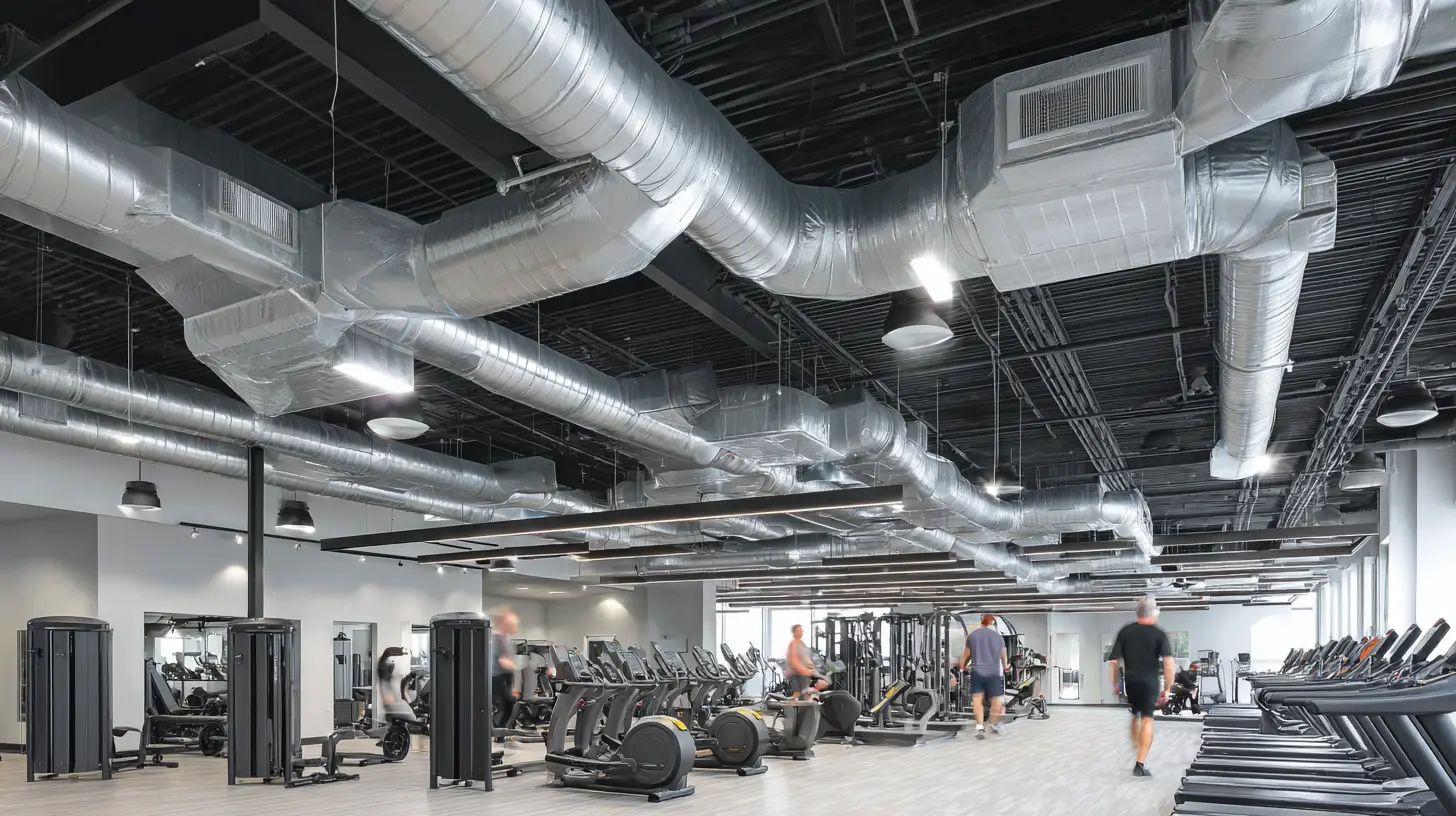
Many gym owners focus heavily on cooling performance when evaluating HVAC systems, but in modern fitness facilities, ventilation is often even more important than temperature control alone. A gym can technically feel “cool” while still suffering from poor indoor air quality, humidity buildup, stale air circulation, and insufficient fresh-air exchange.
Throughout Westchester County, commercial gyms, training facilities, boutique fitness studios, and mixed-use wellness spaces face unique HVAC demands because occupancy levels, heat generation, humidity, and air contaminants fluctuate constantly throughout the day.
Modern fitness centers produce significantly higher indoor air quality demands than traditional office spaces. Without proper ventilation design, even powerful cooling systems struggle to maintain healthy and comfortable indoor conditions during busy operating hours.
Gym owners evaluating commercial HVAC strategies may also benefit from our guide to commercial gym HVAC system design and ventilation efficiency.
Cooling systems primarily remove heat from indoor spaces, but gyms generate much more than heat alone.
During peak occupancy periods, fitness centers produce:
A gym can feel cold while still having poor air quality. Proper ventilation and fresh-air exchange are critical for maintaining healthy indoor conditions during heavy occupancy.
Without adequate ventilation, members often experience stale air, lingering odors, excessive humidity, and discomfort even when temperatures appear acceptable.
Commercial gyms experience rapidly changing occupancy conditions throughout the day.
Morning classes, afternoon traffic, evening peak hours, and specialized training sessions all create different ventilation and airflow requirements.
Traditional commercial cooling systems are often not designed to handle the dynamic occupancy conditions found inside modern gyms.
Facilities with group training areas, spin rooms, turf zones, and weightlifting spaces often require different ventilation strategies within the same building.
Indoor air quality has become one of the most important operational concerns for modern fitness centers.
Members now expect gyms to maintain:
Ventilation directly affects member comfort, workout performance, and overall perception of cleanliness inside a gym.
Gyms with inadequate ventilation frequently develop complaints involving stuffy conditions, humidity buildup, excessive odors, and uncomfortable workout environments during busy periods.
Humidity management is one of the largest HVAC challenges inside fitness facilities.
High occupancy, physical activity, and rapid air turnover generate substantial indoor moisture loads throughout the day.
Even powerful air conditioning systems may struggle if ventilation rates and dehumidification strategies are not properly designed.
Humidity imbalance also increases strain on commercial HVAC equipment and can accelerate wear on flooring, walls, and interior finishes.
Ventilation systems are responsible for introducing fresh outdoor air while exhausting stale indoor air from the building.
In gyms, air exchange rates become especially important because of:
Fresh-air ventilation is often the difference between a gym that feels comfortable and one that feels stale and overcrowded.
Modern ventilation design frequently incorporates dedicated outdoor air systems, energy recovery ventilation, and variable-speed airflow controls to improve indoor conditions efficiently.
Many commercial gyms throughout Westchester rely on rooftop HVAC systems to manage cooling, ventilation, and air distribution.
These systems must handle:
Without preventative maintenance and proper ventilation balancing, rooftop systems often struggle during peak occupancy periods.
Commercial property owners may also benefit from our guide to why commercial HVAC systems struggle during early summer heat waves.
Different areas of a gym often require different airflow and temperature strategies.
For example:
Modern zoning systems help manage these different airflow requirements more effectively while improving energy efficiency.
Commercial gym HVAC systems operate under heavy year-round demand and require structured preventative maintenance to maintain indoor comfort and air quality.
Routine maintenance helps reduce equipment strain while improving ventilation consistency throughout the facility.
Facilities that delay preventative maintenance often experience increased member complaints during periods of high summer occupancy.
Older fitness facilities often require HVAC modernization as occupancy demands increase and indoor air quality expectations evolve.
Common retrofit upgrades include:
Many facilities also benefit from redesigning airflow pathways to improve circulation across crowded workout zones.
Commercial property owners evaluating real-world gym HVAC upgrades may also benefit from reviewing our Retro Fitness gym HVAC project in Yonkers.
Proper ventilation design directly affects member retention, comfort, indoor air quality, and equipment reliability.
Gyms with strong ventilation systems often experience:
Modern gyms require HVAC systems designed around ventilation and air quality — not just cooling capacity alone.
Many commercial facilities throughout HVAC services in White Plains NY 10601 face similar ventilation challenges because fitness centers throughout Lower Westchester often combine high occupancy loads, rooftop HVAC systems, and extended operating hours.
Modern gyms place far greater demands on HVAC systems than traditional commercial buildings because occupancy levels, humidity generation, indoor air contaminants, and ventilation requirements fluctuate constantly throughout the day.
While cooling performance remains important, ventilation, fresh-air exchange, humidity management, and airflow balancing are often even more critical for maintaining healthy and comfortable indoor conditions inside fitness facilities.
Proper HVAC planning, preventative maintenance, zoning control, and commercial ventilation design all play major roles in long-term gym comfort and indoor air quality performance.
Yukos Mechanical helps fitness centers, commercial property owners, and gym operators throughout Westchester County improve ventilation performance, indoor air quality, and HVAC reliability for modern fitness environments. Contact Yukos Mechanical to schedule a commercial HVAC consultation today.
Professional commercial HVAC planning, ventilation balancing, rooftop system diagnostics, and preventative maintenance can help gyms maintain healthier indoor environments year-round.
Schedule Commercial HVAC ConsultationVentilation helps remove stale air, humidity, odors, and airborne contaminants while bringing fresh outdoor air into the facility. Proper ventilation improves indoor air quality and member comfort.
Yes. Cooling systems reduce temperature, but without proper ventilation and fresh-air exchange, gyms may still experience stale air, humidity buildup, and poor indoor air quality.
Physical activity, high occupancy, and continuous airflow demand generate significant indoor moisture loads that require specialized ventilation and dehumidification strategies.
Commercial gym HVAC systems typically require scheduled preventative maintenance multiple times per year because of heavy occupancy and extended runtime demands.
Many gyms benefit from rooftop HVAC systems combined with dedicated outdoor air systems, zoning controls, humidity management, and advanced ventilation strategies.
Our clients trust us for fast, reliable HVAC solutions—see their stories below!


Whether you’re planning a new system or just need service advice, our team is here to help—no pressure, no obligations.