Make-up air systems
Inspect, service, coordinate, and integrate equipment that replaces air removed by kitchen, process, restroom, or other exhaust systems.

Commercial airflow & ventilation · Since 2003
Address exhaust, replacement air, outside air, duct distribution, humidity, and building pressure as connected operating conditions—not isolated equipment.
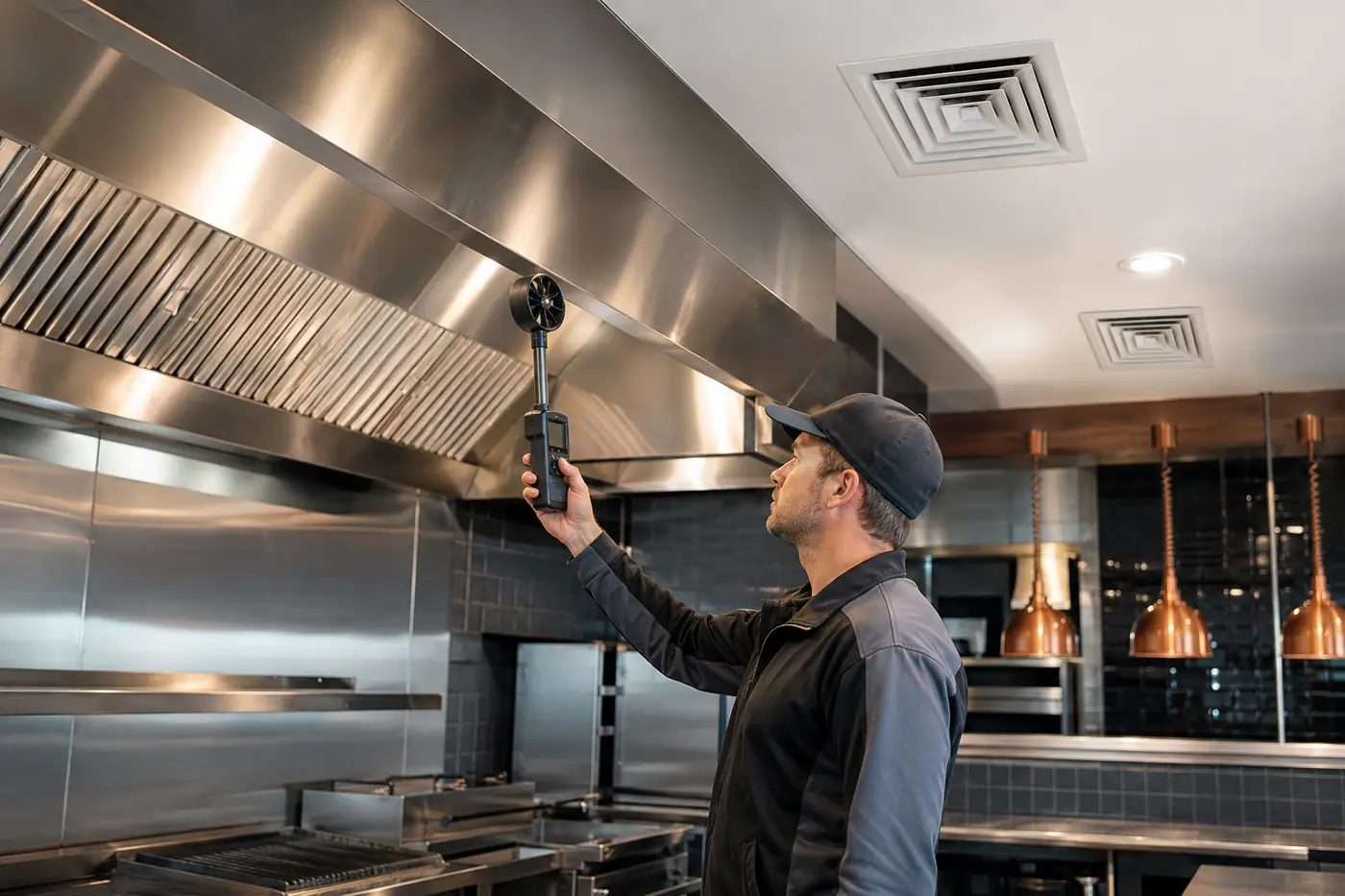
Air has to be replaced and distributed
Whenever a building exhausts air, replacement air has to enter somewhere. If make-up air or outside-air delivery is insufficient, uncontrolled, poorly distributed, or out of sequence, the building can develop negative pressure, difficult doors, drafts, odor migration, weak exhaust capture, temperature complaints, and excessive load on the HVAC system.
Yukos Mechanical reviews ventilation equipment together with supply air, exhaust, ductwork, controls, operating schedules, and the spaces affected. This system-level approach is especially important in restaurants, breweries, laundromats, fitness centers, schools, club facilities, and other properties with high occupancy or process exhaust.
Our commercial portfolio includes exposed spiral ductwork in Pawling, fitness-center ventilation in Yonkers, hospitality HVAC at Wolf & Warrior Brewery in White Plains, dryer exhaust in an Ossining laundromat, and ducted HVAC and ventilation for a Connecticut diner.
Ventilation capabilities
Inspect, service, coordinate, and integrate equipment that replaces air removed by kitchen, process, restroom, or other exhaust systems.
Evaluate fan operation, controls, duct conditions, airflow, discharge, operating sequence, and interaction with the building.
Review hood capture, exhaust volume, make-up air delivery, pressure relationships, drafts, odor movement, and comfort impact.
Install or correct supply, return, exhaust, make-up air, and exposed spiral ductwork for airflow and serviceability.
Review accessible dampers, controls, equipment operation, distribution, and the effect of outside air on occupied spaces.
Investigate moisture, humidity, infiltration, door pressure, and airflow symptoms that involve multiple connected systems.
Common symptoms
Measure the interaction
Increasing cooling capacity will not correct a pressure imbalance. A stronger exhaust fan can worsen the building if replacement air is not addressed. More supply air in one zone can disrupt capture or push odors elsewhere.
The diagnostic scope should consider when the complaint occurs, which systems are operating, how air moves between spaces, and whether controls and operating sequences match the intended use.
Request a Ventilation AssessmentSelected project evidence
Yonkers, NY · Fitness center
Trane rooftop replacement strategy, increased outside air, exposed ductwork, airflow balancing, and humidity improvements for cardio, weight, and studio zones.
View project →Pawling, NY · Steel-frame facility
Commercial spiral duct installation designed for high ceilings, efficient distribution, ventilation performance, and long-term mechanical reliability.
View project →White Plains, NY · Brewery
Commercial air distribution and cooling designed for an open-ceiling brewery environment with changing occupancy and hospitality loads.
View project →How the work is organized
Identify when the condition occurs, which fans and HVAC systems are running, and which doors, rooms, or processes are affected.
Review exhaust, make-up air, supply air, outside air, controls, accessible ductwork, and pressure-related conditions.
Use relevant airflow observations and measurements to separate symptoms from equipment, distribution, control, or balance problems.
Complete approved adjustments, repairs, or installation work and review performance under representative operating conditions.
Questions from commercial clients
Make-up air replaces air removed by exhaust systems. Without adequate replacement air, the building can become negatively pressurized and develop door, draft, odor, comfort, or equipment-performance problems.
Yes. Yukos Mechanical works with commercial exhaust, make-up air, ductwork, rooftop equipment, and airflow conditions relevant to restaurant and hospitality spaces.
Yes. Pressure imbalance, restricted distribution, poor outside-air setup, exhaust interaction, or control sequencing can make otherwise capable heating or cooling equipment appear ineffective.
Yes. The Yukos portfolio includes exposed spiral ductwork, fitness-center distribution, hospitality installations, dryer exhaust, and other commercial air-distribution work.
Related commercial services
Describe the building use, exhaust equipment, affected spaces, when the issue occurs, and any recent equipment or operational changes.