Application and zoning review
Assess building layout, zone count, occupancy, control needs, indoor-unit options, equipment locations, access, and project constraints.

Commercial VRF systems · Since 2003
Plan, install, commission, maintain, and troubleshoot variable refrigerant flow and multi-zone systems for multifamily, office, mixed-use, healthcare, and renovation applications.
Flexible zoning, disciplined execution
VRF systems can deliver independent comfort control across many zones with compact refrigerant distribution and multiple indoor-unit options. That flexibility is valuable in multifamily buildings, offices, mixed-use properties, healthcare environments, renovations, and projects where conventional duct routing is difficult.
The same flexibility creates coordination demands. Outdoor and indoor equipment, branch controllers, refrigerant piping, vertical risers, condensate, communication wiring, power, controls, addressing, operating modes, startup, and documentation must all agree.
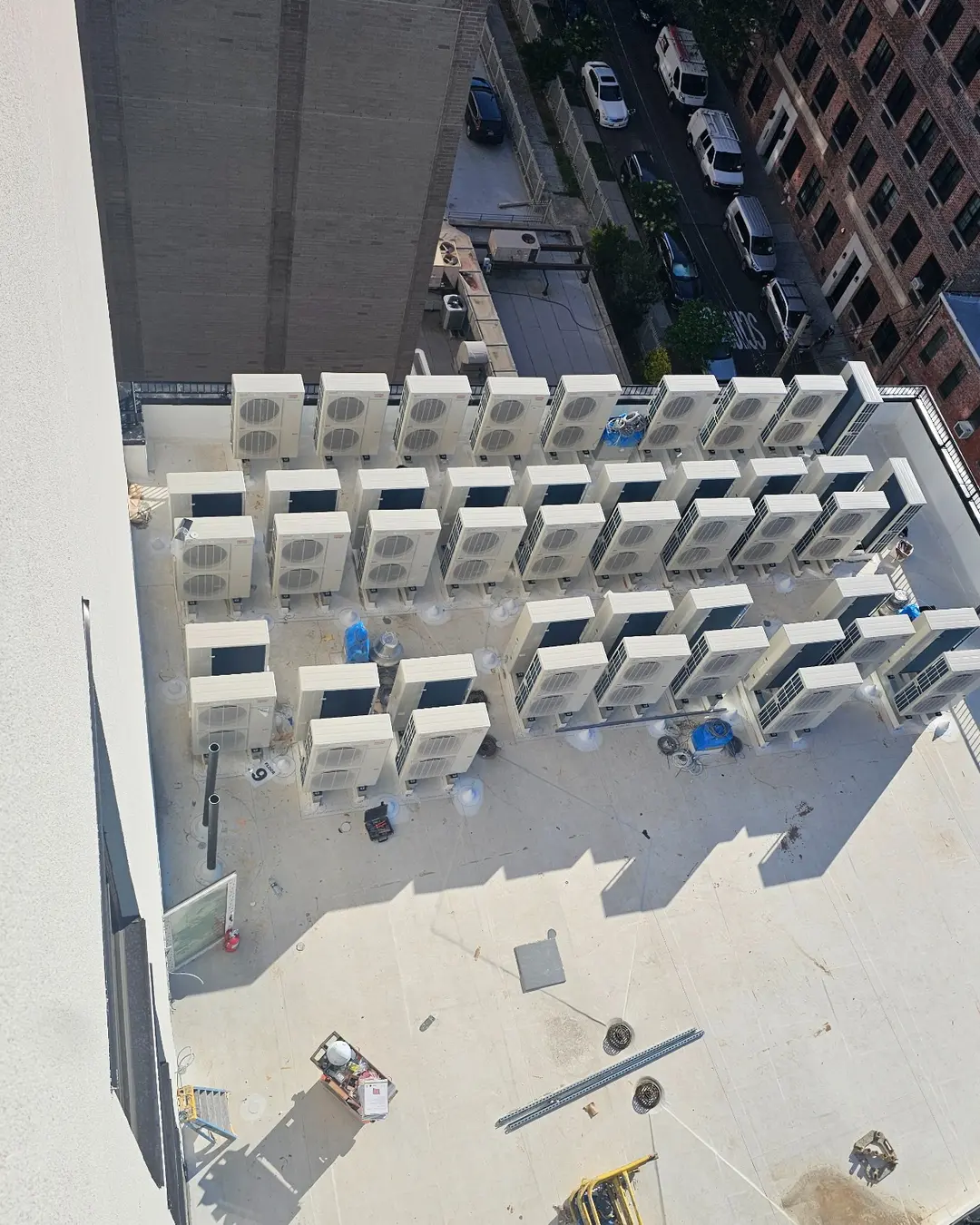
Yukos Mechanical brings relevant project experience from a Mitsubishi multi-zone installation for 12 apartments in Harrison, a large rooftop VRF system at a Bronx multifamily complex, and room-by-room mini-split installations at a rehabilitation facility.
VRF capabilities
Assess building layout, zone count, occupancy, control needs, indoor-unit options, equipment locations, access, and project constraints.
Coordinate condenser placement, indoor units, clearances, mounting, service access, drainage, power, and architectural integration.
Plan main piping, branch controllers, vertical routing, penetrations, insulation, testing, and documentation for multi-zone systems.
Address thermostats, zone controllers, communication wiring, addressing, operating modes, schedules, and central-control requirements.
Verify system relationships, controls, zone response, operating modes, alarms, and relevant startup requirements before handoff.
Support changeover, zone complaints, communication issues, inconsistent performance, alarms, and maintenance across connected equipment.
Where VRF fits
Design discipline
VRF is powerful, but it is not automatically the right system for every building. Outside-air strategy, heating conditions, redundancy, electrical service, controls, refrigerant routing, condensate, service access, occupancy, and owner capabilities must be considered.
A good application makes the zoning advantages meaningful. A poor application simply concentrates complexity in piping, controls, and commissioning.
Request a VRF AssessmentSelected project evidence
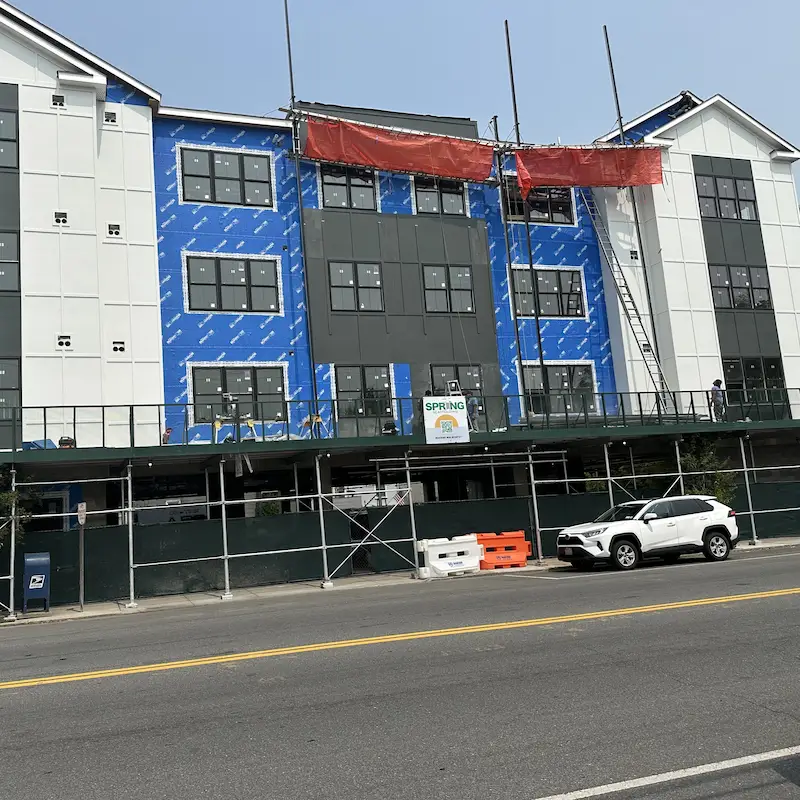
Harrison, NY · 12 apartments
Branch-controller integration, vertical refrigerant piping, individualized unit control, and inverter-driven performance for a new multifamily building.
View project →Whitlock Avenue, Bronx · Multifamily
Rooftop condenser bank, multi-zone refrigerant distribution, branch-controller integration, inverter-driven control, and compact urban layout.
View project →New City, NY · Rehabilitation facility
Commercial mini-split installation providing individual room control and energy-efficient cooling across a healthcare-related facility.
View project →How the work is organized
Define served spaces, loads, control expectations, indoor-unit needs, equipment locations, access, and outside-air strategy.
Align refrigerant routes, branch controllers, risers, drains, communication wiring, power, penetrations, and trade responsibilities.
Build the connected system with attention to manufacturer requirements, testing, labeling, and future service access.
Verify addressing, modes, zone response, controls, alarms, and handoff information, then plan seasonal service.
Questions from commercial clients
Variable refrigerant flow systems connect one or more outdoor units to multiple indoor zones and modulate delivered capacity as zone demand changes.
It can be. The Yukos portfolio includes multifamily VRF projects in Harrison and the Bronx. The decision still depends on zoning, outside air, routing, controls, access, heating conditions, and ownership priorities.
Yukos Mechanical supports seasonal service and troubleshooting for VRF and multi-zone equipment, subject to the specific system and issue.
A VRF system depends on correct equipment relationships, piping, communication, addressing, controls, operating modes, and zone setup. Commissioning verifies that the connected system responds as intended.
Related commercial services
Share the building type, number of zones, project stage, plans if available, and any space, access, or operating constraints.