Residential HVAC system replacement and startup in Hastings-on-Hudson, NY, including pressure testing, evacuation to 350 microns, electrical connections, air-handler integration, thermostat completion, and heating/cooling verification.
This residential HVAC project in Hastings-on-Hudson, New York, covered outdoor equipment replacement, refrigerant piping, electrical and control connections, air-handler integration, startup, operational testing, and final thermostat completion. The work was completed in stages so the replacement equipment could be installed, tested correctly, and coordinated with the home’s existing boiler-based heating arrangement.
The outdoor heat-pump condenser was configured to serve cooling in this application, while the boiler continued to provide heat through the indoor system. That hybrid operating arrangement made accurate wiring, control setup, and mode verification especially important.
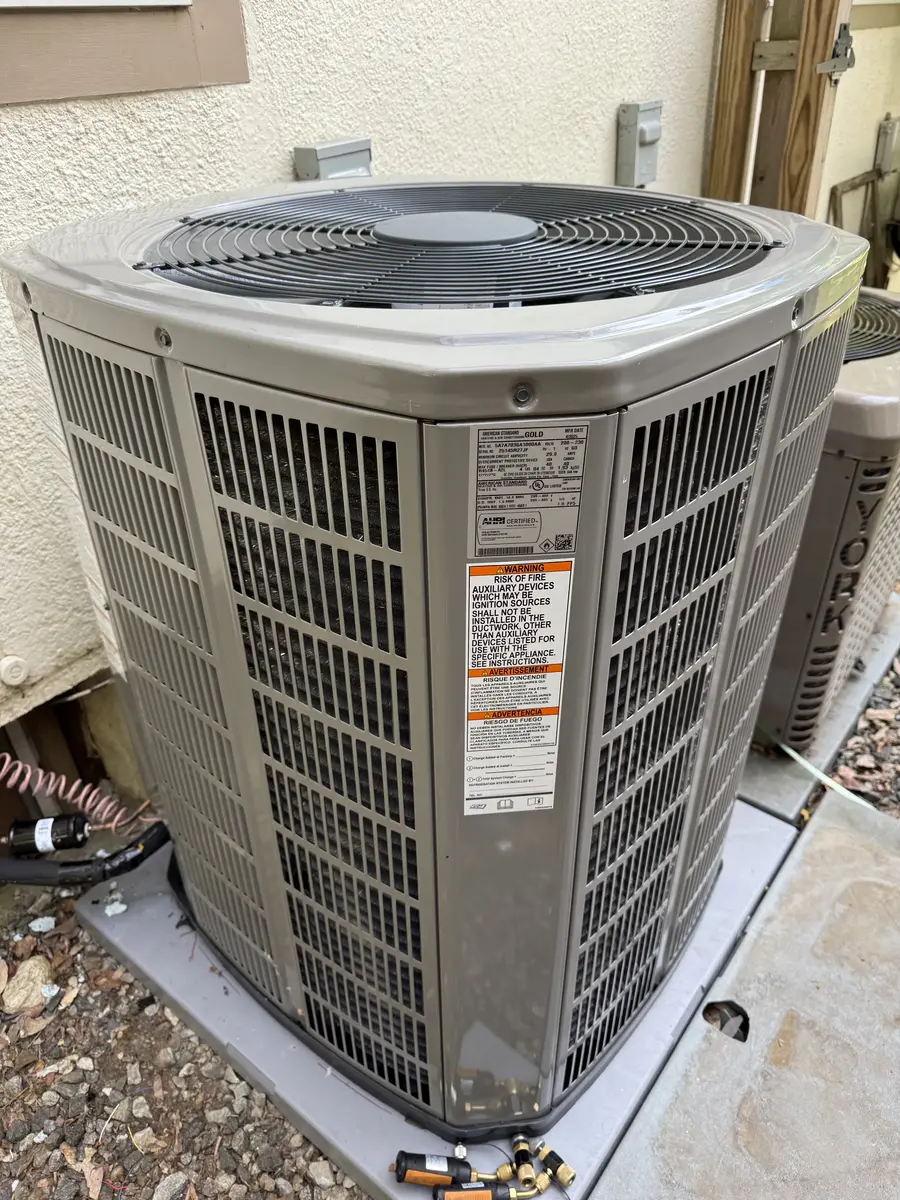
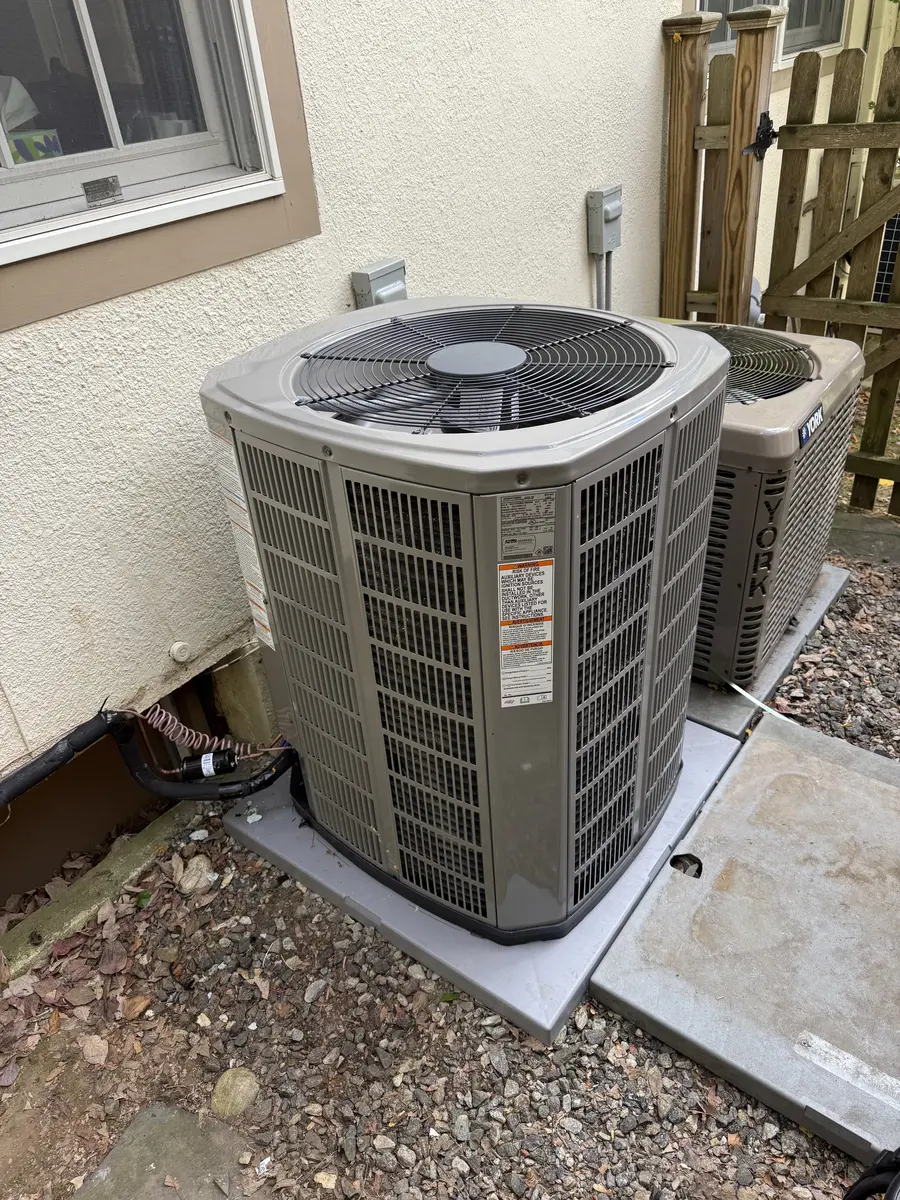
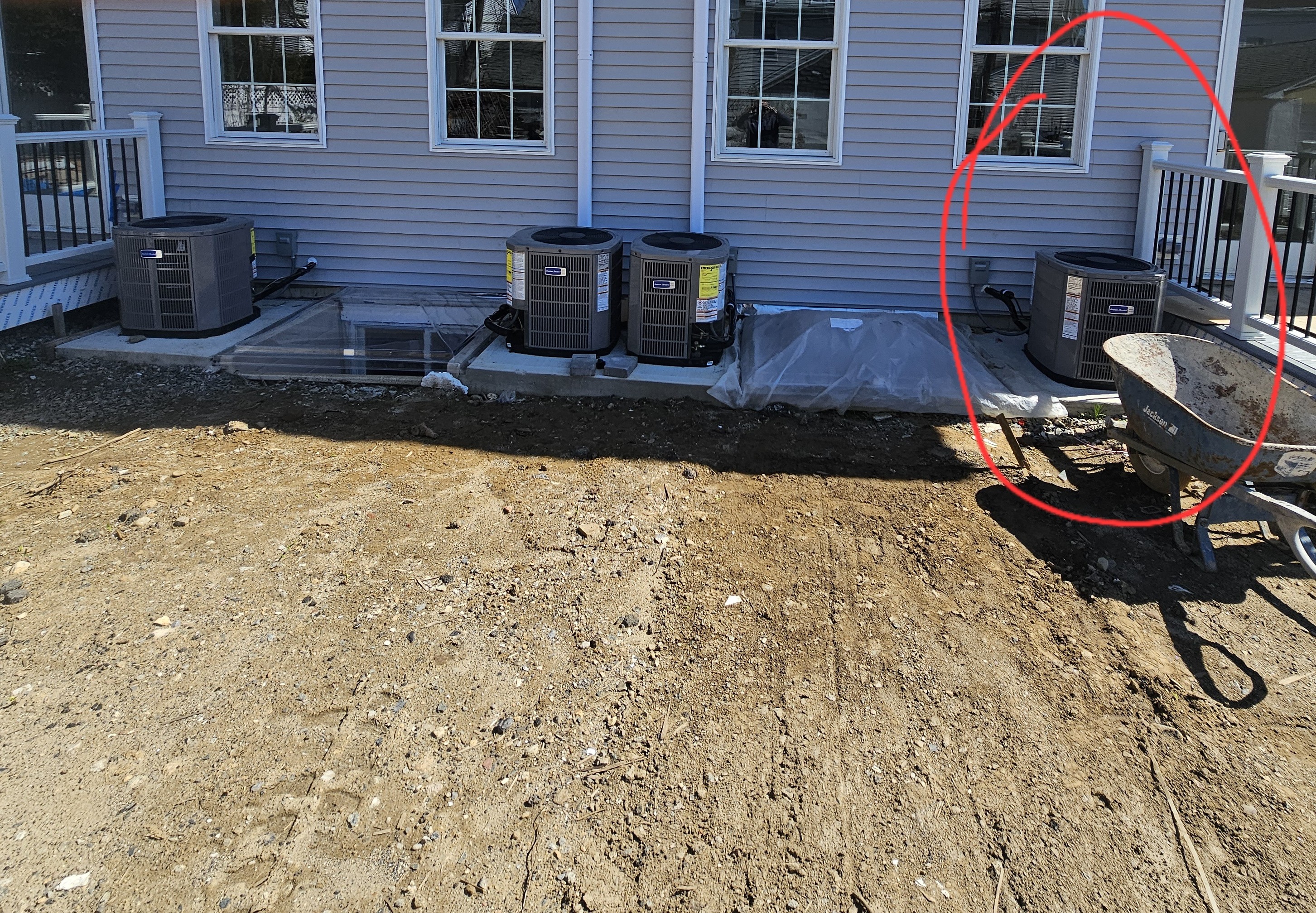
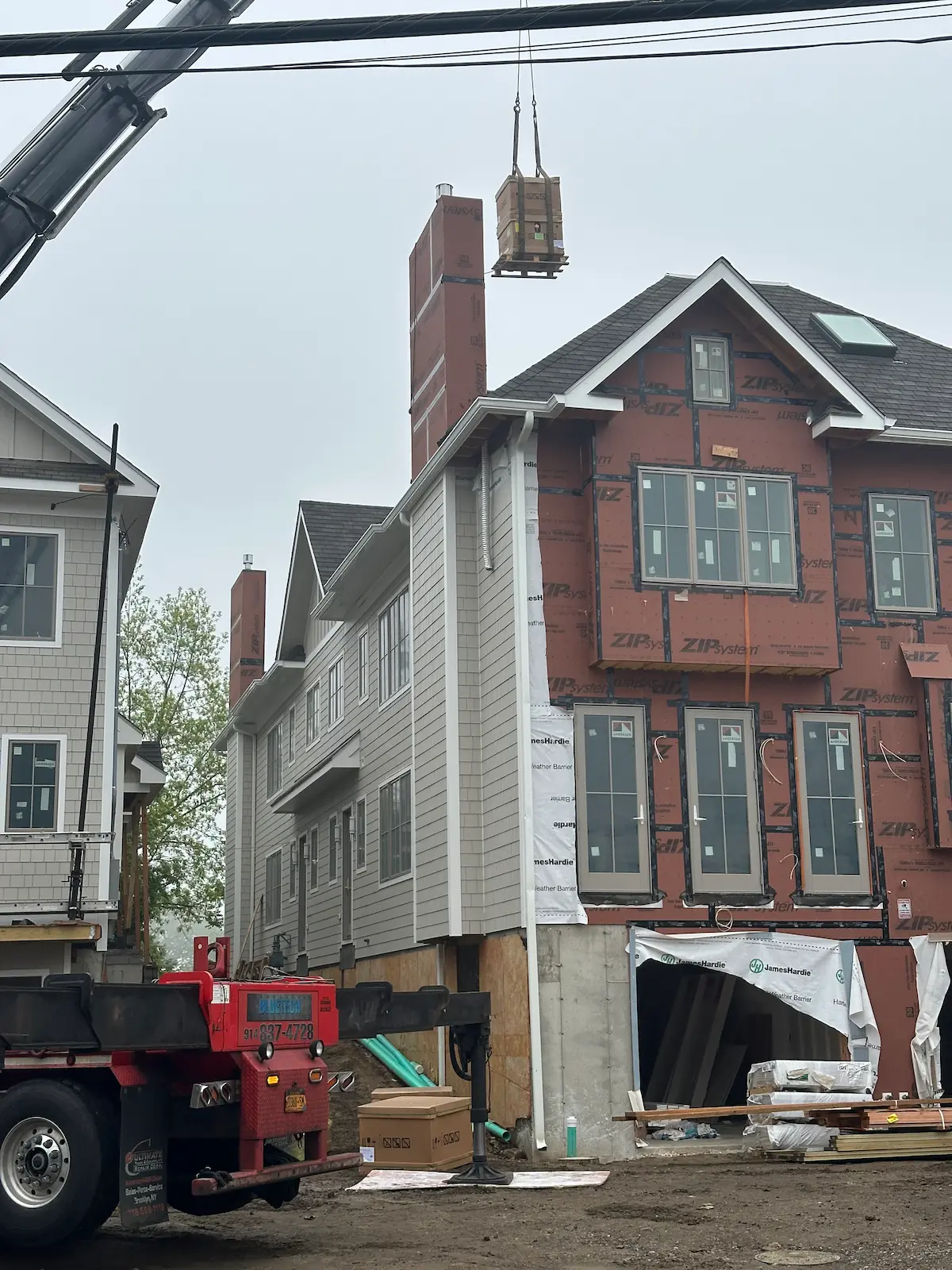
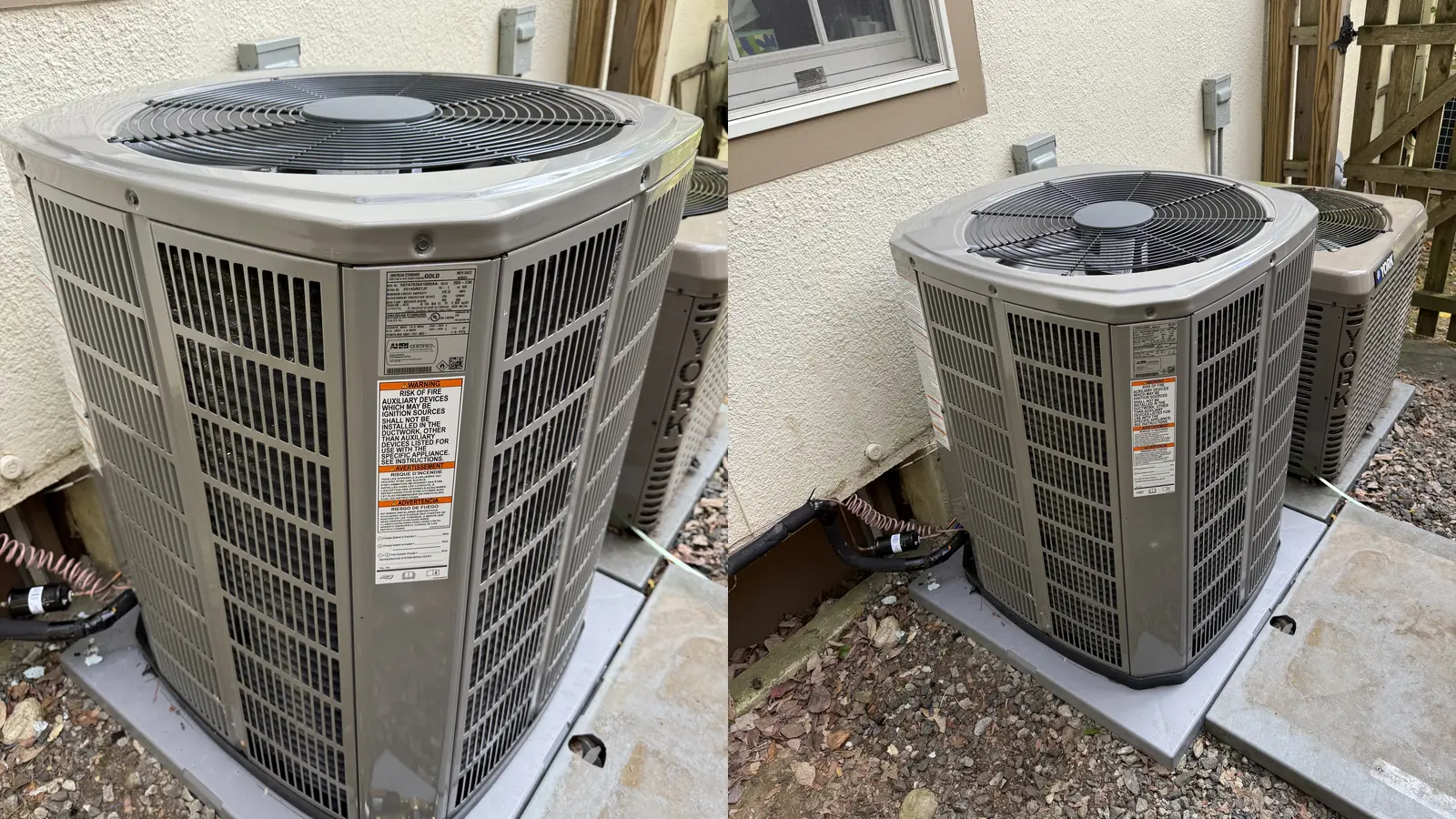
The project began with recovery and relocation work involving the existing outdoor equipment. After the site was prepared, the replacement condenser was installed beside the home. The photographs document the new outdoor unit, the relationship between the two condenser locations, and the available service space around the equipment.
Keeping a clear record of the outdoor arrangement matters on multi-unit residential systems. It helps distinguish which condenser serves each indoor zone and provides future technicians with visual context for service, maintenance, and troubleshooting.
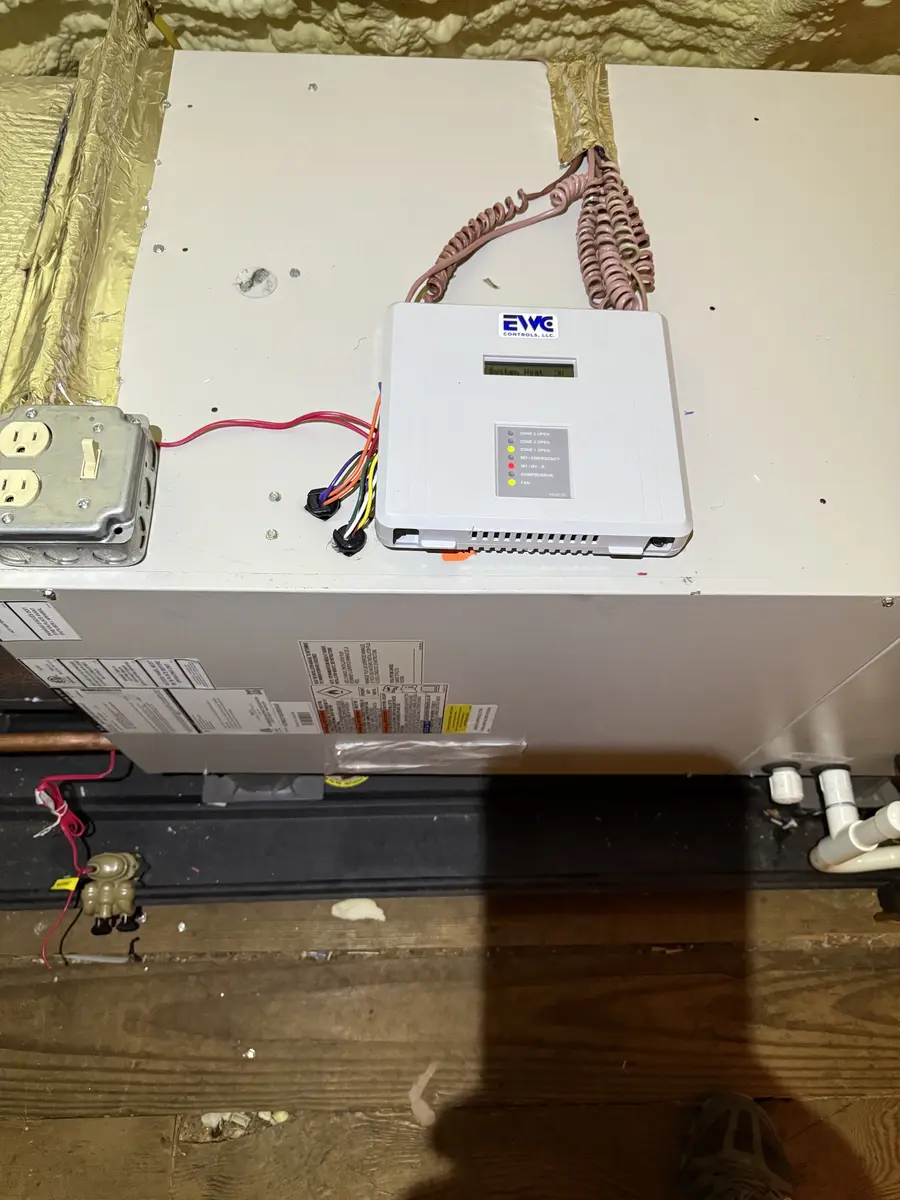
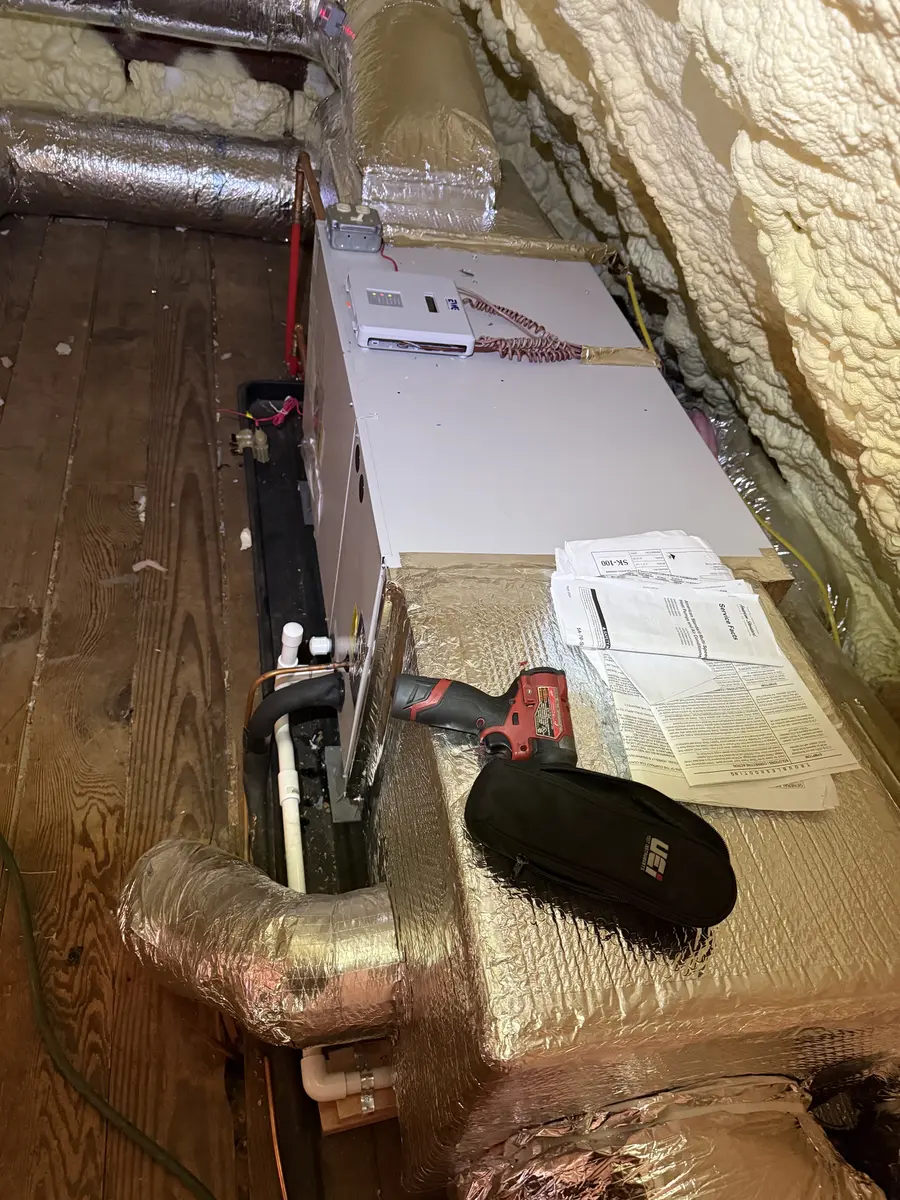
The refrigerant lines were connected to the indoor air-handling equipment, and a new filter was installed as part of the startup preparation. The indoor photographs show the air handler, refrigerant piping, drain connections, and the control compartment used during the electrical and operational checks.
Both high- and low-voltage wiring were connected to the air-handling unit. The team verified the outdoor and indoor connections before opening the service valves. This sequencing protected the refrigerant circuit and ensured the equipment was mechanically and electrically ready before startup.
Before refrigerant was released through the completed circuit, the system passed a pressure test. This verified the integrity of the new connections and helped rule out leakage at the joints completed during the replacement work.
The refrigerant circuit was then evacuated to 350 microns. Deep evacuation removes air and moisture from the sealed system before operation. Reaching and documenting this level provided a concrete commissioning checkpoint rather than relying only on a quick vacuum indication.
After the evacuation and electrical checks were complete, the service valves were opened and the system was started. Cooling operation was tested, followed by verification of the home’s heating response. The project correspondence confirms that heat was supplied by the boiler and that the outdoor heat-pump condenser was intentionally connected for cooling-only operation.
This distinction is important because an outdoor unit capable of heat-pump operation does not necessarily serve as the active heat source in every system design. The final control arrangement was checked against the way this particular home was intended to operate.
A follow-up visit completed the second-zone thermostat installation. After the thermostat work, the system was checked again and documented as operating properly. Together, the pressure test, 350-micron evacuation, wiring work, mode verification, and follow-up control completion provide a much stronger project record than photographs alone.
The documented result was a functioning residential cooling system integrated with the existing boiler-heating configuration. The project preserved the established heating strategy while completing the outdoor equipment replacement and indoor-system startup.
Outdoor equipment: Replacement condenser installed and photographed in its final residential location.
Indoor integration: Refrigerant piping, air-handler connections, drainage, filter, and control components documented.
Electrical work: High- and low-voltage connections completed before startup.
Refrigerant procedure: Pressure test passed and the circuit was evacuated to 350 microns.
Operational checks: Cooling and boiler-supplied heating response verified.
Controls completion: Second-zone thermostat installed during project closeout.
Yukos Mechanical provides residential HVAC installation, replacement, startup, and diagnostic service throughout Hastings-on-Hudson and neighboring Rivertown communities. Each system is evaluated according to its actual equipment and control configuration rather than treated as a generic replacement.
Explore more residential HVAC projects, see a related heat-pump startup and diagnostics project, review our ductless and heat-pump services, or contact Yukos Mechanical about a home comfort system.