A 1,000 sq. ft. heated driveway with a dedicated Navien boiler, insulated hydronic tubing, glycol circuit and automatic snow-melt controls.
Yukos Mechanical installed a dedicated hydronic snow-melt system for the driveway of a newly built luxury home. The approximately 1,000-square-foot area in front of the garage was designed for automatic snow and ice melting, with its own Navien boiler, insulated tubing layout and glycol circulation circuit.
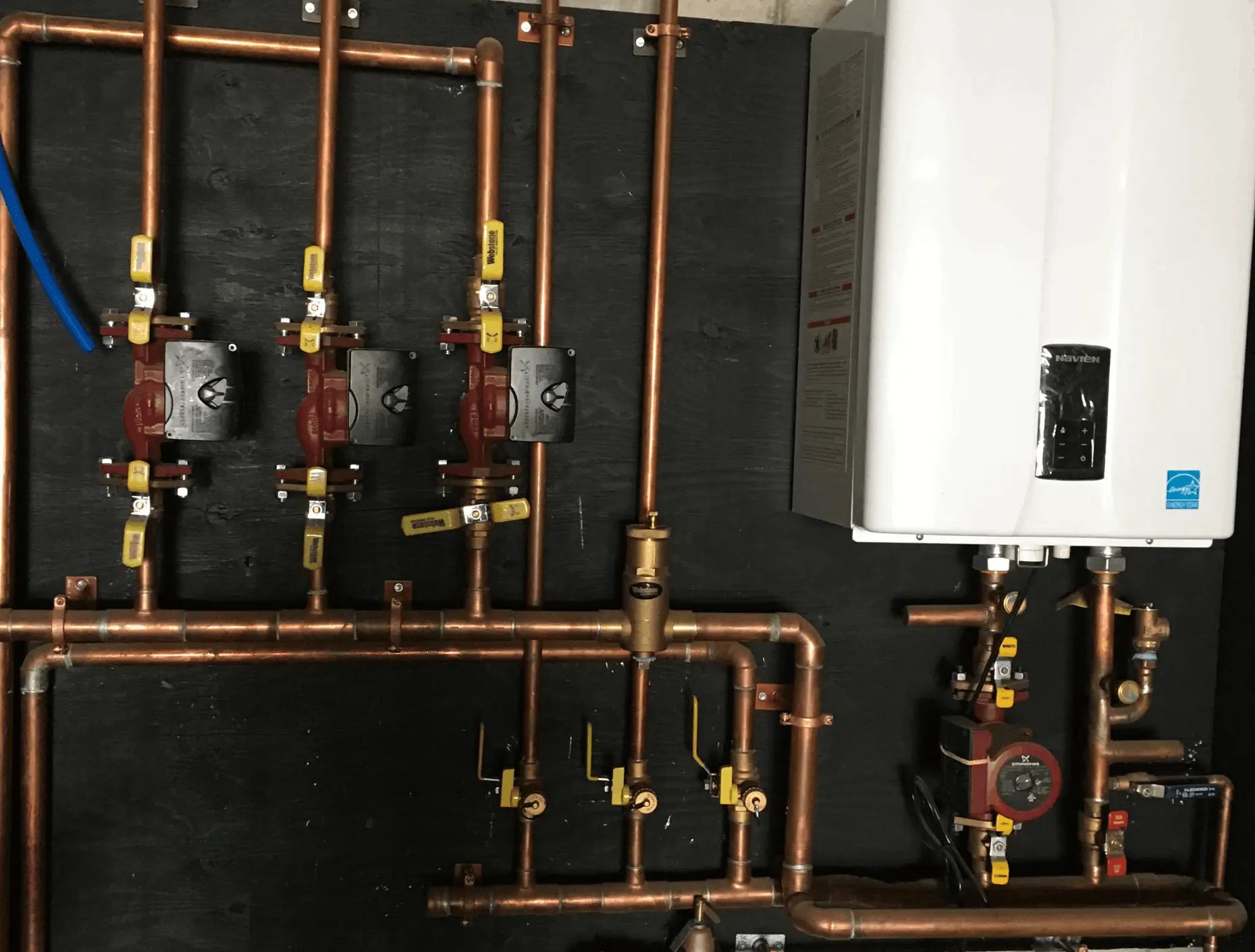
Heating an outdoor driveway creates a different demand from heating rooms inside a house. For this project, a dedicated Navien boiler supplies the snow-melting system independently of the home's primary heating equipment. The approximately 150,000 BTU/h figure is the project's calculated heating load, rather than a stated boiler model rating.
This arrangement gives the driveway a separate heat source and operating controls. The system is designed around the size of the outdoor surface and its winter operating conditions instead of simply adding the driveway to an existing indoor heating zone.
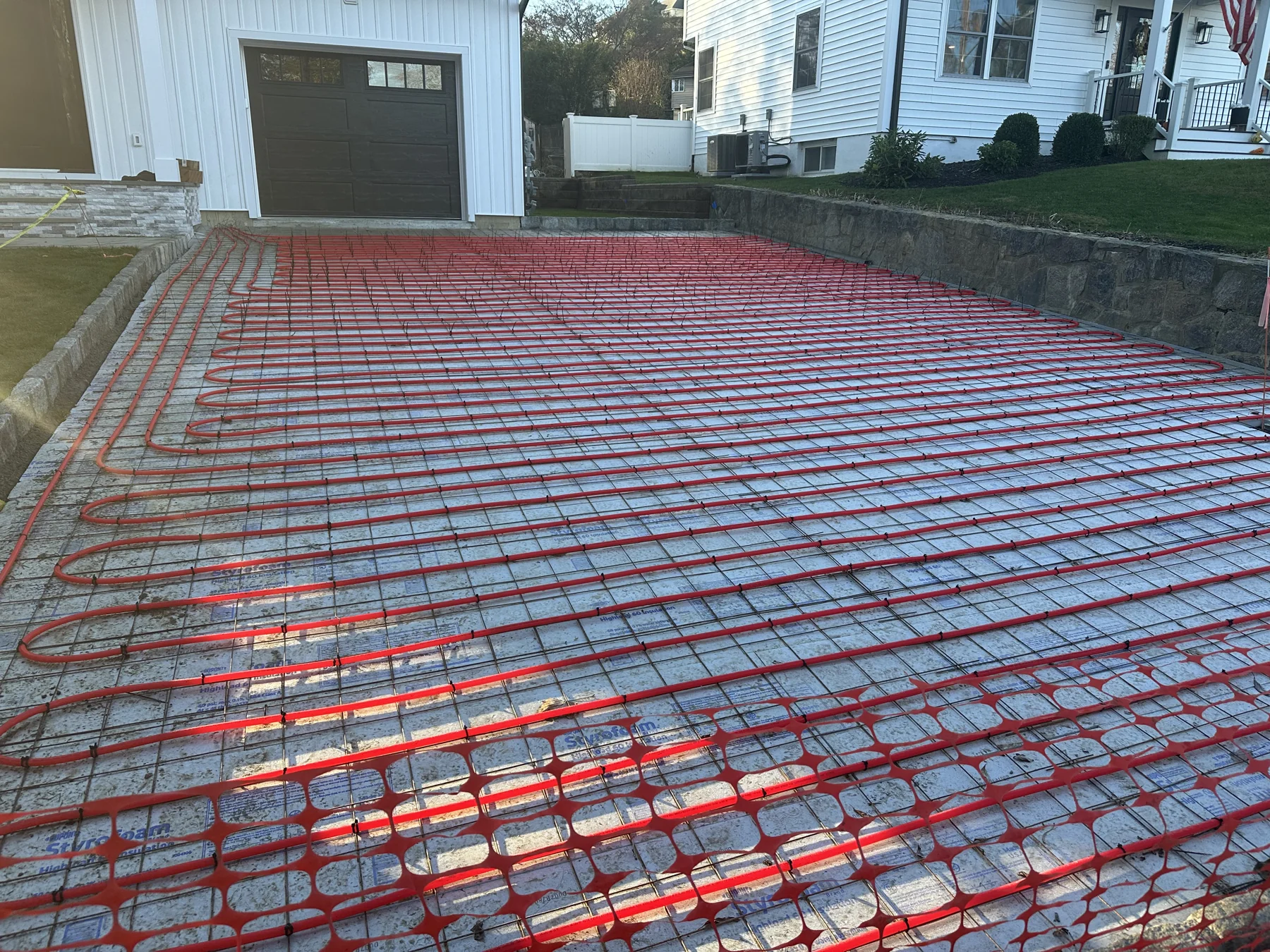
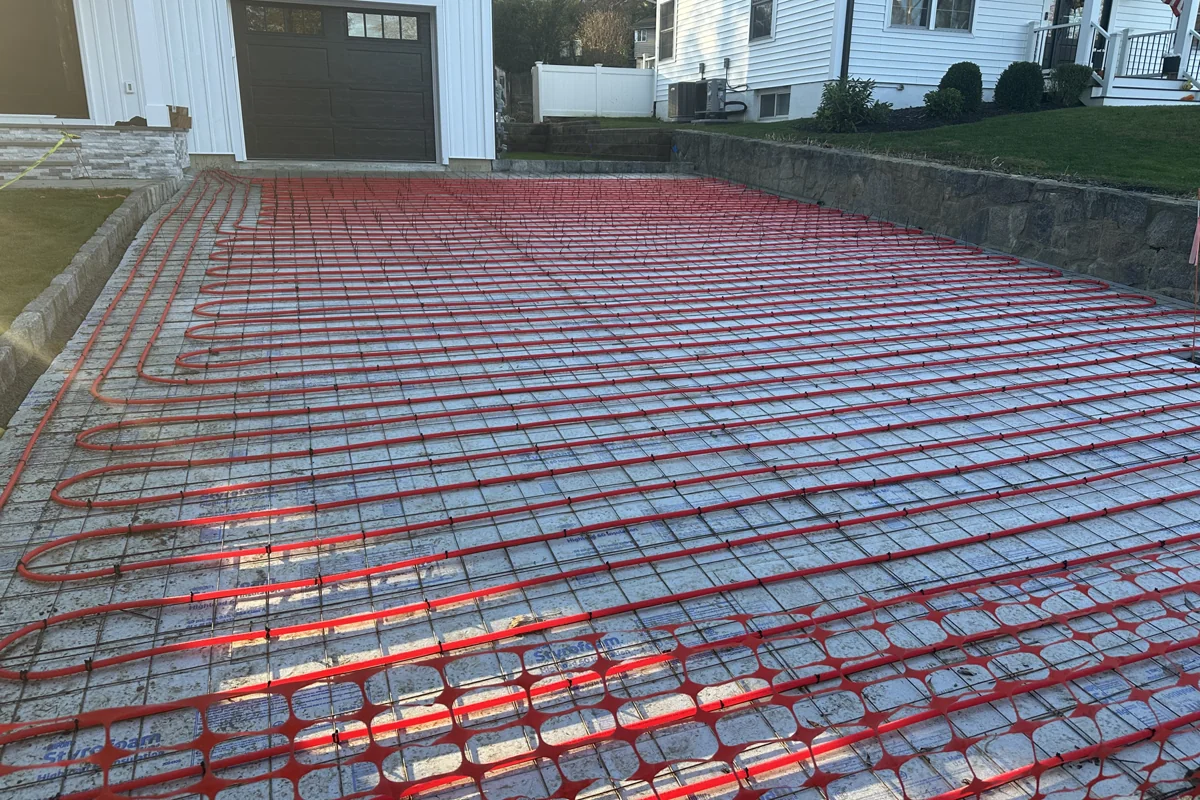
The driveway heating circuit uses approximately 1,600 feet of tubing divided into four loops. The installation photograph shows the tubing secured to wire mesh over rigid foam insulation before the finished driveway surface is installed.
Approximately four to five inches of heavy-duty insulation were installed below the piping. The insulation was selected for the driveway application and vehicle loads, helping reduce downward heat loss and improve heat delivery toward the surface. The mesh supports the tubing layout while the driveway construction proceeds.
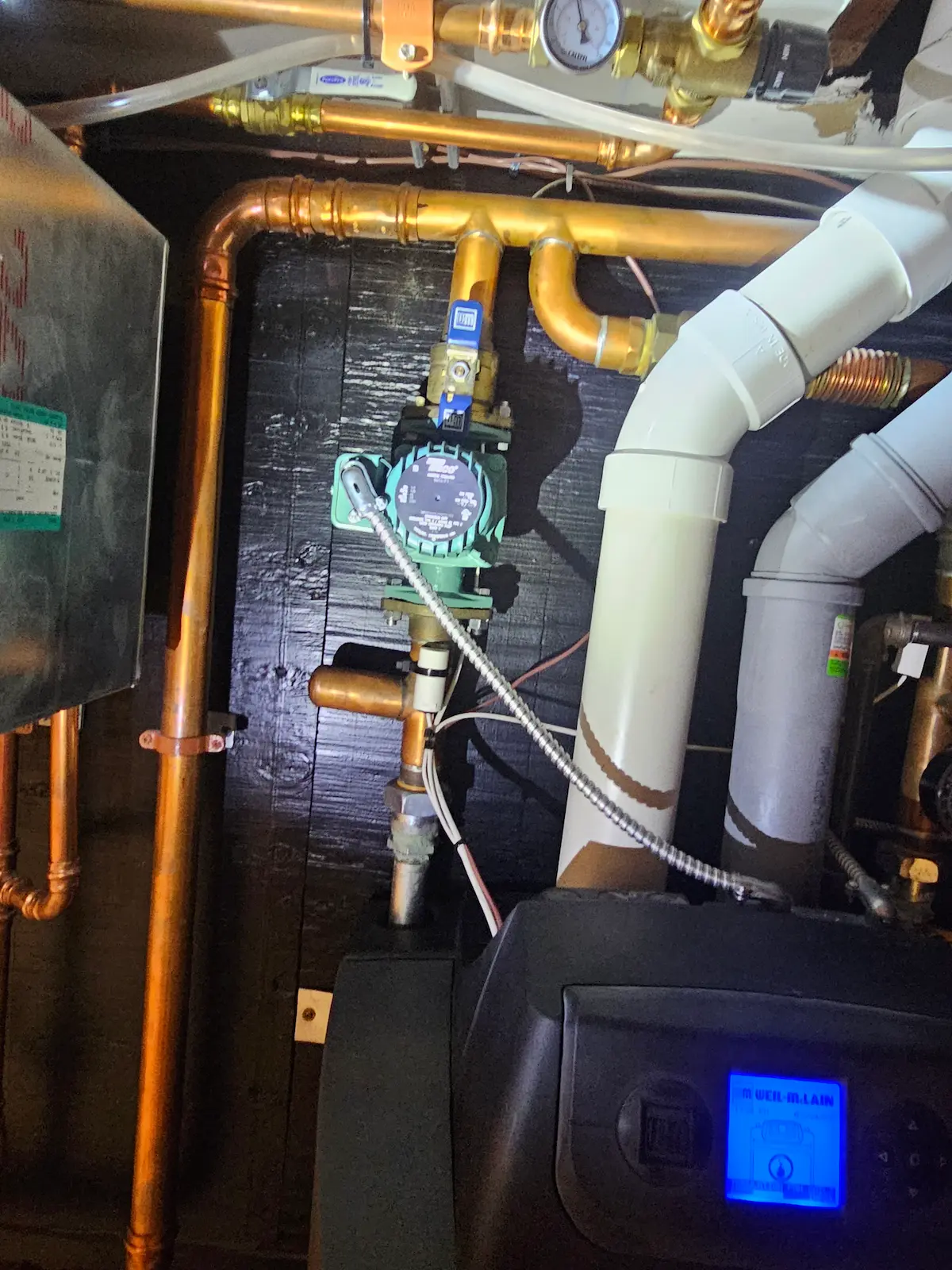
A plate heat exchanger separates the boiler-water circuit from the outdoor snow-melt circuit. The outdoor tubing carries a glycol antifreeze mixture, with dedicated circulation pumps and control valves serving the driveway loops.
Separating the two circuits allows the outdoor side to use freeze protection suited to its exposure while transferring heat from the boiler. The glycol concentration and condition remain important maintenance considerations; freeze protection depends on the specified mixture and operating conditions.
An outdoor sensor assembly detects temperature and moisture conditions and communicates with the controller in the mechanical room. When conditions call for snow melting, the controls activate the heating and circulation equipment.
The aim is convenient winter access with less reliance on manual activation. Actual melting performance depends on weather conditions, surface construction and the system's design capacity. Drainage and the transition to unheated surfaces also need to be considered when planning a heated driveway.
This project illustrates why snow-melt installation is well suited to new construction and major driveway renovations: the tubing, insulation, sensor placement and mechanical connections can be coordinated before the finished surface is installed. Yukos Mechanical has completed several specialized snow-melt installations for new homes and major residential renovations.
For homeowners, architects and custom-home builders considering a heated driveway in Lower Westchester, an initial review should cover the heated area, available fuel supply, boiler location, drainage, paving schedule and desired winter performance. Selected Fairfield County, Connecticut projects are reviewed according to location, scope and scheduling.
Explore our boiler and hydronic heating services, view more residential mechanical projects, or request a snow-melt installation assessment. Share the property location, approximate driveway dimensions and construction timeline so our team can review the project.