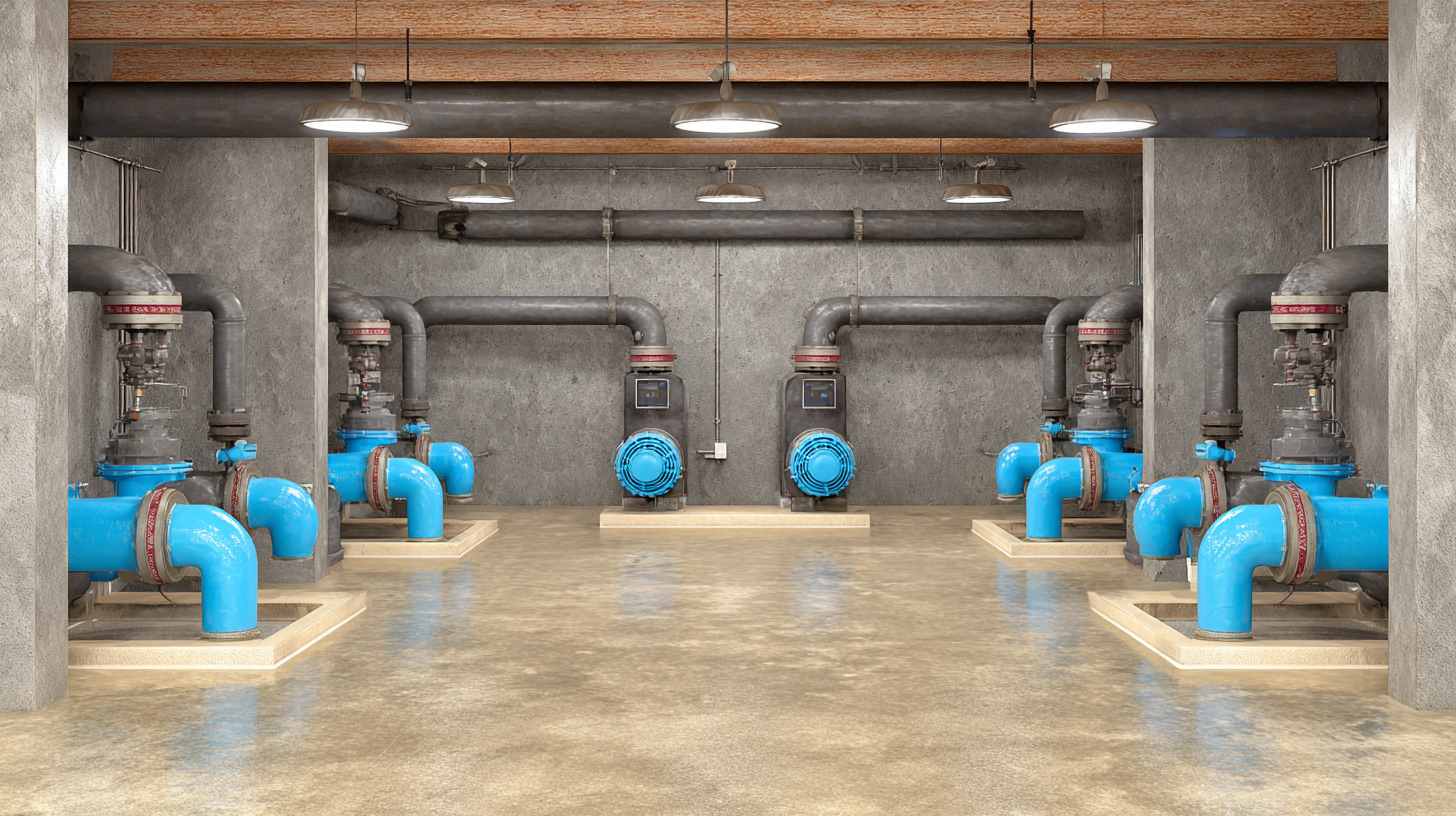
Modern commercial HVAC systems are evolving rapidly throughout the New York Tri-State area as building owners prioritize energy efficiency, zoning flexibility, ventilation performance, and indoor air quality. One commercial HVAC solution that continues to gain traction in multifamily buildings, office towers, mixed-use developments, medical facilities, and hospitality properties is the water source heat pump (WSHP) system.
Unlike traditional centralized HVAC systems, water source heat pump systems allow individual spaces to heat or cool independently while sharing a common water loop. This creates exceptional zoning flexibility, improved efficiency, and more stable indoor comfort across buildings with varying occupancy loads and exposure conditions.
When paired with properly engineered humidification systems, WSHP technology becomes even more effective for commercial buildings throughout Westchester County, New York City, Connecticut, and the broader Tri-State region where winter dryness and seasonal humidity swings can significantly affect indoor comfort and air quality.
Commercial property owners evaluating high-efficiency ventilation and zoning systems may also benefit from our guide to commercial HVAC ductwork design and airflow performance, since airflow balancing and zoning strategy play major roles in WSHP performance.
A water source heat pump system is a decentralized HVAC system where individual heat pump units are installed throughout a building and connected to a shared closed-loop water system.
Each unit independently exchanges heat with the water loop, allowing simultaneous heating and cooling in different parts of the building.
This makes WSHP systems especially valuable for:
Water source heat pump systems excel in buildings where different zones require different temperatures at the same time. This flexibility is one of the biggest reasons they continue gaining popularity in commercial HVAC design.
While layouts vary between buildings, most WSHP systems include several major components working together continuously.
Each tenant space, office, apartment, or zone typically contains its own heat pump unit capable of independently heating or cooling based on local demand.
This creates superior occupant control compared to many traditional centralized HVAC systems.
The closed-loop piping network circulates water throughout the building and transfers energy between zones.
The water loop generally operates within a moderate temperature range to maximize efficiency.
Cooling towers reject excess heat during warmer months, while boilers provide supplemental heat during winter conditions when loop temperatures drop.
Modern commercial buildings increasingly integrate steam or evaporative humidification systems to maintain healthier indoor air conditions during dry winter operation.
Commercial properties throughout Westchester County and New York City often contain highly variable occupancy patterns and diverse environmental loads.
For example:
Traditional centralized HVAC systems often struggle to accommodate these competing demands efficiently.
WSHP systems solve this challenge by allowing each zone to operate independently.
Commercial facilities focused on reducing operating costs may also benefit from our guide to energy-saving HVAC optimization strategies.
One of the greatest advantages of water source heat pump systems is internal heat recovery.
Rather than wasting excess heat, the system transfers energy between building zones.
For example:
This energy-sharing approach significantly reduces the amount of supplemental heating and cooling required from boilers and cooling towers.
The result is:
Humidity management is often overlooked in commercial HVAC planning, especially during Northeast winter conditions.
As heating systems operate continuously through colder months, indoor humidity levels frequently become uncomfortably dry.
Low indoor humidity may contribute to:
Commercial buildings throughout White Plains, Yonkers, Stamford, and Manhattan often require integrated humidification systems to maintain balanced indoor conditions during winter operation.
Temperature control alone does not guarantee indoor comfort. Proper humidity management is essential for healthy indoor air quality and occupant satisfaction.
Modern commercial humidification systems can be integrated into multiple areas of a building’s HVAC infrastructure.
Common installation locations include:
Most larger commercial properties integrate humidification control into building automation systems (BAS) for precise monitoring and environmental balancing.
Commercial facilities evaluating ventilation-heavy HVAC environments may also benefit from reviewing our Wolf Brewery HVAC project in White Plains, which involved advanced commercial airflow and environmental-control planning.
Water source heat pump systems perform especially well in buildings requiring flexible zoning and variable occupancy management.
Strong applications include:
In older commercial buildings where ductwork space is limited, decentralized WSHP systems can simplify retrofit planning while maintaining strong efficiency performance.
Property owners modernizing older commercial buildings may also benefit from our guide to commercial gym HVAC ventilation and efficiency design, since both building types require advanced zoning and airflow management.
Although WSHP systems are highly efficient, they require consistent preventative maintenance to maintain reliable long-term operation.
Routine maintenance tasks typically include:
Without proper maintenance, water quality problems and system imbalance can reduce efficiency significantly.
Commercial building operators focused on long-term reliability may also benefit from our guide to preventative HVAC maintenance strategies.
Improper balancing may reduce efficiency and create inconsistent heating or cooling performance between zones.
Untreated water can damage heat exchangers, valves, and piping systems over time.
Oversized humidifiers or poor control calibration may create condensation problems or indoor discomfort.
Older commercial buildings throughout Westchester County often require electrical upgrades, piping modifications, and airflow redesign during WSHP installation.
Water source heat pump systems are widely recognized for supporting high-efficiency commercial building operation.
Key sustainability advantages include:
As energy regulations continue evolving throughout New York State, many building owners are exploring HVAC modernization strategies that reduce long-term operational costs while improving environmental performance.
Commercial facilities throughout White Plains HVAC services increasingly prioritize energy-efficient HVAC infrastructure during major renovations and tenant improvements.
Modern commercial buildings increasingly prioritize indoor air quality because ventilation and occupant wellness directly affect productivity and comfort.
When combined with:
WSHP systems can support significantly healthier indoor environments than many aging centralized HVAC systems.
This becomes especially important in densely occupied commercial buildings with long operating hours and variable occupancy schedules.
Modern commercial HVAC systems must balance efficiency, zoning flexibility, ventilation, and indoor air quality simultaneously. Water source heat pump systems help commercial buildings achieve all four.
WSHP systems are often an excellent solution for commercial properties requiring:
Because every building operates differently, professional HVAC evaluation is essential before selecting any large-scale commercial system.
Water source heat pump systems continue gaining popularity throughout the New York Tri-State area because they combine zoning flexibility, heat recovery efficiency, scalable commercial design, and strong long-term energy performance.
When integrated with properly engineered humidification systems, WSHP technology can significantly improve occupant comfort, indoor air quality, and operational efficiency across multifamily, office, hospitality, and mixed-use commercial buildings.
Yukos Mechanical helps commercial property owners throughout Westchester County evaluate HVAC modernization strategies, improve ventilation performance, optimize indoor air quality, and design energy-efficient commercial comfort systems tailored to each building’s operational needs. Contact Yukos Mechanical to schedule a commercial HVAC consultation today.
Discover smarter, more efficient climate control solutions tailored for your building.
Get Expert ConsultationA water source heat pump system is a commercial HVAC setup where individual heat pump units exchange heat through a shared water loop, allowing flexible zone-by-zone heating and cooling.
WSHP systems provide strong energy efficiency, zoning flexibility, heat recovery capability, and independent tenant comfort control in multifamily and commercial buildings.
Proper humidification helps improve indoor comfort, reduce dry-air problems, support indoor air quality, and protect furnishings during winter heating operation.
Yes. WSHP systems require regular maintenance including water treatment, filter replacement, loop monitoring, pump inspection, and humidifier servicing.
Office buildings, hotels, multifamily properties, mixed-use developments, and buildings requiring flexible zoning often benefit most from water source heat pump systems.
Our clients trust us for fast, reliable HVAC solutions—see their stories below!


Whether you’re planning a new system or just need service advice, our team is here to help—no pressure, no obligations.