Heating and cooling your home often account for nearly half of total household energy usage, making your HVAC system one of the biggest contributors to monthly utility bills. Throughout Westchester County and the New York Tri-State area, homeowners rely heavily on air conditioning during humid summers and dependable heating systems during freezing winter conditions.
When HVAC systems operate inefficiently, utility costs can rise dramatically without improving comfort. Fortunately, there are many practical ways homeowners can reduce energy consumption, improve HVAC efficiency, and extend equipment lifespan without sacrificing indoor comfort.
Energy efficiency is especially important in older Northeast homes where aging ductwork, inconsistent insulation, outdated controls, airflow imbalance, and seasonal humidity swings place additional strain on heating and cooling systems.
At Yukos Mechanical, our residential HVAC team helps homeowners improve comfort and reduce operating costs through maintenance, airflow optimization, smart controls, insulation improvements, and high-efficiency HVAC upgrades tailored to local homes.
Homeowners looking to better understand system performance may also benefit from our guide to understanding HVAC system insights.
Efficient HVAC systems use less energy to maintain comfortable indoor temperatures. Reducing wasted energy not only lowers monthly utility bills, but also decreases system wear, improves humidity control, and extends equipment lifespan.
Energy-efficient HVAC operation helps:
Many homeowners assume energy savings require complete HVAC replacement, but in reality, airflow improvements, maintenance, thermostat optimization, and insulation upgrades can often produce meaningful savings.
Energy efficiency is not just about HVAC equipment. Airflow balance, ductwork condition, insulation, humidity control, thermostat settings, and maintenance all affect how efficiently a home heats and cools.
One of the most effective ways to reduce energy consumption is maintaining the HVAC system consistently throughout the year.
Dirty filters, clogged coils, airflow restrictions, refrigerant imbalance, and neglected blower components force systems to work harder while reducing comfort.
Air filters should typically be replaced every 1–3 months depending on occupancy, pets, allergies, and system usage.
Dirty filters reduce airflow, increase energy usage, and place strain on blower motors and compressors.
Professional HVAC maintenance before cooling season and heating season helps identify developing problems before they become major repairs.
Seasonal tune-ups may include refrigerant testing, airflow evaluation, electrical inspection, combustion analysis, thermostat calibration, and coil cleaning.
Homeowners preparing for summer cooling season may also benefit from our guide to signs your AC system is overdue for maintenance.
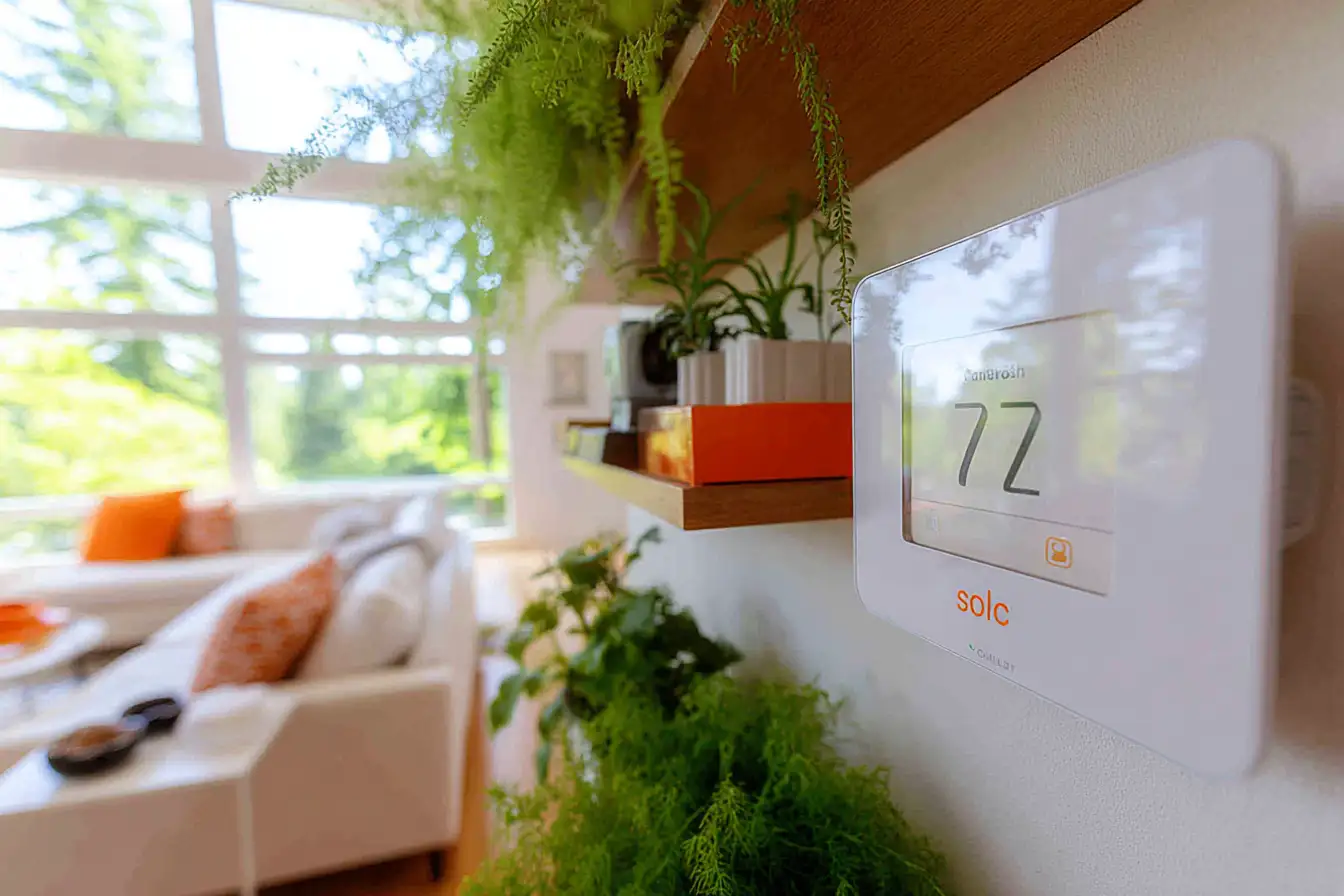
Smart thermostats help reduce unnecessary HVAC runtime by automatically adjusting temperatures based on occupancy, scheduling, and usage patterns.
Modern smart thermostat features may include:
Many homeowners throughout Westchester County reduce energy consumption simply by avoiding unnecessary cooling or heating while the home is unoccupied.
Small thermostat adjustments can create meaningful long-term energy savings without reducing comfort.
Many older homes throughout the Northeast lose significant amounts of conditioned air through attic gaps, poorly insulated walls, crawl spaces, aging windows, and duct leakage.
Improving insulation and sealing air leaks reduces the workload placed on the HVAC system.
Important areas to evaluate include:
Homes with humidity imbalance and inconsistent comfort may also benefit from our guide to why older Westchester homes struggle with humidity during early summer.
Ceiling fans improve air circulation and help rooms feel cooler during summer by creating a wind-chill effect.
During winter, reversing ceiling fan direction can help redistribute rising warm air more evenly throughout the room.
Ceiling fans allow homeowners to:
Outdoor condensers require unrestricted airflow to operate efficiently.
Leaves, grass clippings, pollen, debris, and overgrown landscaping can block airflow around the outdoor unit, forcing the system to work harder.
Homeowners should:
Professional coil cleaning may also improve cooling efficiency during peak summer demand.
Minor thermostat adjustments can create significant annual energy savings.
Recommended energy-saving strategies include:
Even modest thermostat adjustments help reduce HVAC workload over long operating periods.
Leaky or poorly designed ductwork is one of the largest hidden sources of HVAC energy waste.
Conditioned air lost through unsealed ducts never reaches occupied rooms, forcing the system to run longer to satisfy thermostat demand.
Common duct-related efficiency problems include:
Homeowners dealing with airflow imbalance may also benefit from our guide to HVAC challenges in older Bronxville homes and renovated Westchester properties.
Even high-efficiency HVAC equipment can waste energy if airflow distribution is poor. Ductwork condition plays a major role in overall system performance.
Reducing indoor heat gain helps cooling systems operate more efficiently.
Simple energy-saving strategies include:
These small adjustments help lower cooling demand during hot weather.
In some homes, older HVAC systems simply operate far below modern efficiency standards.
Systems over 10–15 years old may struggle with:
Modern high-efficiency systems often include:
Homeowners comparing system upgrades may also benefit from our guide to HVAC replacement costs in the New York Tri-State area.
Clean HVAC systems improve indoor air quality while operating more efficiently.
Improving indoor air quality may involve:
Homes with cleaner airflow pathways often experience lower blower strain and more stable HVAC operation.
Energy efficiency should be approached as a year-round strategy rather than a one-time project.
Consistent maintenance, airflow optimization, insulation improvements, smart thermostat usage, and professional diagnostics all contribute to long-term HVAC savings.
Property owners throughout Scarsdale HVAC services frequently modernize airflow systems and improve insulation to reduce both summer cooling costs and winter heating expenses.
Reducing HVAC energy usage does not always require major renovation or complete system replacement. In many homes, practical improvements such as maintenance, airflow optimization, smart thermostat upgrades, duct sealing, and insulation improvements can dramatically improve efficiency and comfort.
Because heating and cooling systems operate heavily throughout the year in the Northeast, even modest efficiency improvements can produce substantial long-term savings.
Yukos Mechanical helps homeowners throughout Westchester County improve HVAC performance, reduce utility bills, and maintain reliable year-round comfort through professional maintenance, diagnostics, airflow balancing, and energy-efficiency upgrades. Contact Yukos Mechanical to schedule an HVAC energy evaluation today.
Professional HVAC maintenance, airflow optimization, insulation improvements, and energy-efficient upgrades can help your home stay comfortable while reducing utility costs year-round.
Schedule HVAC Energy EvaluationMost HVAC filters should be replaced every 1–3 months depending on pets, allergies, occupancy, and system usage.
Yes. Smart thermostats help reduce unnecessary HVAC runtime through programmable schedules, occupancy detection, and automatic temperature adjustments.
Leaky or poorly designed ductwork wastes conditioned air and forces HVAC equipment to run longer to maintain indoor temperatures.
Yes. Ceiling fans improve air circulation and allow homeowners to raise thermostat settings slightly while maintaining comfort.
Systems over 10–15 years old with declining efficiency, frequent repairs, or rising utility bills may benefit from replacement evaluation.
Our clients trust us for fast, reliable HVAC solutions—see their stories below!


Whether you’re planning a new system or just need service advice, our team is here to help—no pressure, no obligations.