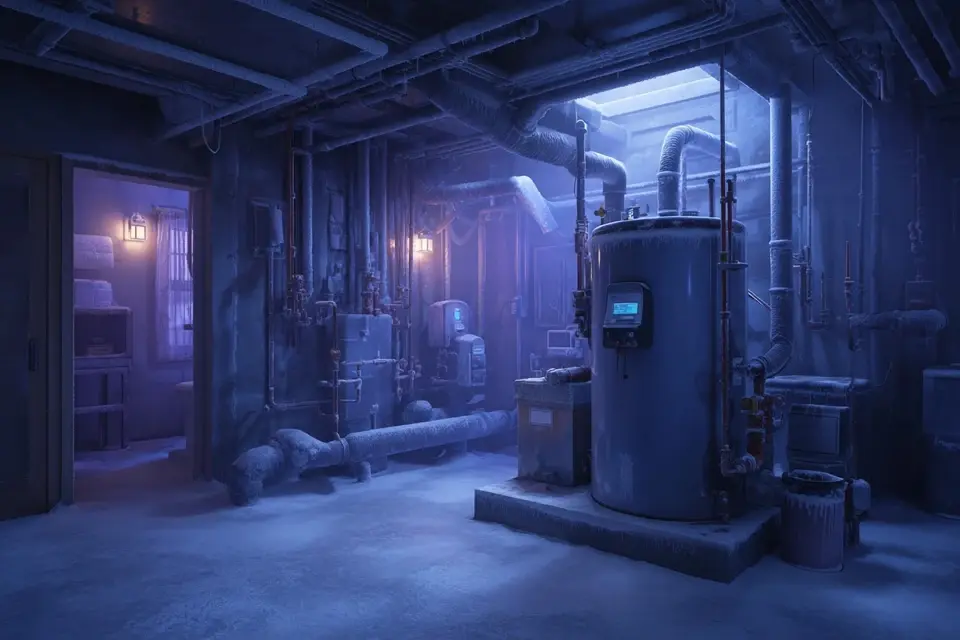
January is the most punishing month of the year for HVAC and plumbing systems across the New York Tri-State area. Prolonged cold snaps, overnight freezes, wind-driven heat loss, and nonstop heating demand create the perfect conditions for frozen pipes, boiler shutdowns, hydronic imbalance, and emergency HVAC failures.
What many homeowners and property managers do not realize is that frozen plumbing and HVAC systems are deeply interconnected. A frozen pipe is rarely just a plumbing problem. In many buildings — especially those using boilers, radiant heating, or hydronic systems — frozen piping directly disrupts HVAC operation and often becomes a full heating emergency.
These conditions are among the most common contributors to the winter HVAC failures affecting Tri-State buildings, particularly during sustained January cold snaps when systems operate continuously with very little recovery time.
Frozen pipes are not isolated plumbing issues. In hydronic heating systems, frozen piping directly impacts boilers, circulation pumps, pressure balance, and overall HVAC reliability.
In homes and buildings using boilers, radiant floors, baseboard heating, or hydronic distribution systems, water must circulate continuously to transfer heat properly.
When piping begins freezing — even partially — circulation becomes restricted.
This often leads to:
As pressure builds inside frozen piping sections, HVAC components are forced into abnormal operating conditions that may damage pumps, valves, expansion tanks, and heat exchangers.
Modern boilers contain safety controls designed to shut systems down when circulation becomes unsafe or pressure conditions move outside acceptable operating ranges.
Frozen piping commonly triggers these safety protections.
Many January heating failures begin with subtle symptoms before a complete shutdown occurs.
Common warning signs include:
Ignoring these symptoms during January can allow relatively small circulation issues to evolve into catastrophic freeze damage.
Many of these operational patterns overlap with the problems discussed in our guide to common boiler and hydronic heating issues in Westchester buildings.
Early winter cold snaps are often short-lived. January is different.
During January:
Even buildings that performed adequately earlier in winter may begin experiencing circulation problems, airflow imbalance, or pipe freezing once prolonged cold weather settles in.
January exposes hidden HVAC weaknesses because systems operate near maximum capacity for weeks at a time with almost no margin for error.
Frozen pipes almost always begin in predictable building locations.
Common high-risk areas include:
Once freezing begins, downstream HVAC components often experience abnormal operating pressure and circulation restrictions.
Homes throughout Scarsdale HVAC services frequently encounter freeze-risk concerns because many older homes contain partially insulated mechanical spaces and aging hydronic piping layouts.
Many homes and multifamily buildings throughout Westchester County were built long before modern insulation and HVAC standards existed.
Common vulnerabilities include:
These structural limitations significantly increase freeze exposure during sustained January cold.
Property owners throughout White Plains HVAC services and surrounding older communities frequently experience winter HVAC stress because many buildings contain partially modernized heating systems layered onto aging infrastructure.
Many of these challenges overlap with the issues discussed in our guide to HVAC challenges in older Westchester homes.
One of the most dangerous misconceptions about frozen pipes is that the damage occurs during freezing itself.
In reality, catastrophic damage often appears after thawing begins.
As frozen pipes thaw, hidden cracks and ruptures begin releasing water into walls, ceilings, mechanical spaces, and finished areas.
By the time visible leaks appear, significant structural damage may already exist.
This delayed failure pattern is why immediate professional HVAC and plumbing evaluation is critical after freeze-related heating interruptions.
Preventing freeze-related HVAC failures requires more than simply raising thermostat settings.
Effective prevention strategies include:
Many of these best practices align closely with the procedures discussed in winter boiler inspections and heating preparation, although January conditions make these measures substantially more urgent.
Airflow problems are often overlooked contributors to winter freeze damage.
Restricted airflow caused by:
can create cold zones inside buildings where pipes become vulnerable to freezing.
Homeowners experiencing weak airflow may also benefit from our guide to common HVAC maintenance warning signs, since airflow restrictions often affect both heating and cooling performance.
If you experience any combination of:
professional HVAC service should not be delayed.
Fast evaluation helps prevent:
During January cold snaps, waiting even a few hours after freeze symptoms appear can dramatically increase repair costs and structural damage risk.
Modern HVAC system design can significantly improve winter reliability by stabilizing airflow, circulation, and environmental control under extreme operating conditions.
Specialized residential environmental-control projects such as this wine room condenser replacement project in Greenwich demonstrate how properly engineered systems maintain stable climate performance even under demanding environmental conditions.
Commercial facilities evaluating advanced HVAC reliability and environmental control may also benefit from reviewing the Wolf Brewery HVAC project in White Plains, which involved specialized ventilation and environmental-management planning.
Frozen pipes and HVAC failures are deeply interconnected problems throughout the New York Tri-State area during January cold snaps. In hydronic systems especially, restricted circulation caused by freezing can quickly trigger boiler shutdowns, pressure imbalance, equipment strain, and major property damage.
Fast professional response, preventative maintenance, airflow management, insulation improvements, and freeze-protection planning all play critical roles in reducing winter HVAC emergencies and protecting long-term building performance.
Yukos Mechanical helps homeowners and property managers throughout Westchester County diagnose freeze-related HVAC problems, stabilize hydronic heating systems, improve winter reliability, and protect buildings from cold-weather mechanical failures through professional HVAC service and preventative maintenance. Contact Yukos Mechanical to schedule winter HVAC support today.
A proactive winter HVAC inspection can prevent frozen pipes from turning into costly emergency repairs.
Schedule Winter ServiceYes. Frozen or partially frozen hydronic piping can restrict circulation, trigger pressure imbalance, and activate boiler safety shutdowns.
Hydronic systems rely on continuous water circulation, and prolonged freezing temperatures increase the risk of circulation restriction and pipe freezing.
Uneven heating, banging pipes, pressure fluctuations, boiler lockouts, and gurgling noises are common early signs of freeze-related circulation problems.
Basements, crawlspaces, attics, garages, exterior walls, and vacant spaces are among the most common areas where freezing begins.
Maintaining stable indoor temperatures, insulating exposed piping, sealing drafts, replacing filters, and scheduling winter HVAC inspections all help reduce freeze-related heating failures.
Our clients trust us for fast, reliable HVAC solutions—see their stories below!


Whether you’re planning a new system or just need service advice, our team is here to help—no pressure, no obligations.