
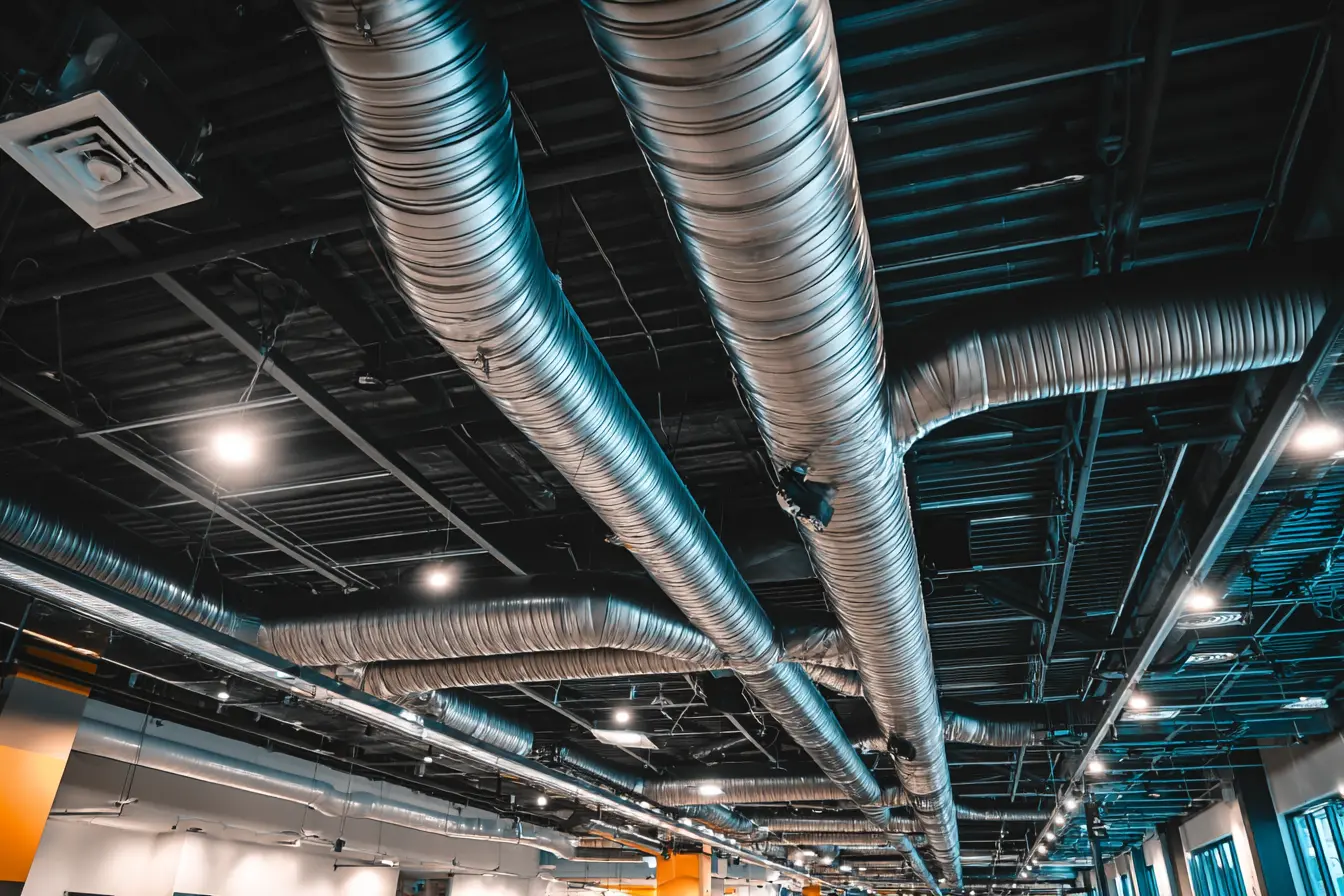
Commercial HVAC ductwork is one of the most important parts of a building’s mechanical system, yet it is often overlooked until comfort complaints, high energy bills, noisy airflow, or indoor air quality problems appear. While rooftop units, heat pumps, boilers, and air handlers receive most of the attention, the duct system ultimately determines how effectively conditioned air reaches each occupied space.
Across Westchester County and the New York Tri-State area, commercial buildings face demanding HVAC conditions. Offices, retail properties, gyms, restaurants, medical suites, mixed-use buildings, warehouses, and multi-tenant spaces all require carefully designed ductwork to maintain airflow, ventilation, comfort, and efficiency.
A poorly designed duct system can make even high-efficiency HVAC equipment perform poorly. Undersized ducts, excessive static pressure, air leakage, poor insulation, unbalanced zones, and improper diffuser placement can all increase operating costs while reducing comfort and air quality.
For commercial property owners evaluating broader system upgrades, our guide to water source heat pump commercial design and humidification explains how advanced HVAC systems depend on strong air distribution planning.
Commercial HVAC ductwork is the network of air distribution channels that moves heated, cooled, filtered, or ventilated air throughout a building.
Its main functions include:
When ductwork is properly designed, occupants experience more consistent comfort and the HVAC equipment operates with less strain.
Ductwork is not just a delivery path for air. It is a performance-critical part of the HVAC system that affects efficiency, comfort, noise, indoor air quality, and equipment lifespan.
Sheet metal ductwork is one of the most common choices in commercial buildings because it is durable, stable, and efficient for high-volume airflow.
It is frequently used in offices, retail buildings, mixed-use properties, schools, and larger commercial facilities where long-term performance and clean airflow delivery matter.
Spiral ductwork is often used in exposed ceiling designs where aesthetics and performance both matter.
It is common in gyms, restaurants, creative offices, retail spaces, and modern industrial-style interiors because it provides strong airflow with a clean architectural appearance.
Flexible ductwork is typically used in limited sections, such as final connections to diffusers or areas where rigid duct transitions are difficult.
It must be installed carefully because excessive bends, compression, or long flexible runs can restrict airflow and increase static pressure.
Insulated duct systems can help reduce heat gain, heat loss, condensation risk, and sound transmission.
They are often used where noise control, energy efficiency, or temperature stability is especially important.
Commercial duct design directly affects how well an HVAC system performs in real-world conditions. Even advanced equipment cannot overcome a poorly designed air distribution network.
Poor duct design can cause:
Proper design accounts for duct sizing, airflow volume, static pressure, building layout, occupancy patterns, ventilation requirements, diffuser selection, and equipment capacity.
Airflow balancing ensures each zone receives the correct amount of conditioned air. Without balancing, some spaces may become too cold while others remain too warm.
Important airflow design factors include:
High static pressure forces fans and blowers to work harder, increasing energy use and equipment wear. In commercial systems, static pressure problems can also create excessive noise and inconsistent airflow across occupied spaces.
Building owners focused on efficiency should also review our guide to HVAC energy efficiency ratings in 2025 to understand how equipment performance and airflow design work together.
Retrofit projects are common throughout the Tri-State area because many commercial buildings were not originally designed for modern HVAC requirements.
Older properties may have limited ceiling space, outdated mechanical rooms, older duct systems, structural constraints, or tenant operations that must continue during construction.
Common retrofit ductwork challenges include:
Solutions may include exposed ductwork, phased installation, compact duct layouts, zoning redesign, and selective duct replacement.
For property owners evaluating broader system improvements, our guide to HVAC replacement costs in the New York Tri-State area explains how ductwork, labor, accessibility, and infrastructure affect overall project investment.
Ductwork has a major impact on HVAC energy efficiency. Poorly sealed, poorly insulated, or poorly routed ducts waste conditioned air before it reaches occupied spaces.
Efficiency improvements may include:
These improvements can reduce wasted energy, improve comfort, and help HVAC equipment operate closer to its intended performance level.
Building owners looking for broader efficiency improvements may also benefit from our guide to energy-saving tips to lower HVAC bills.
Commercial ductwork plays a major role in indoor air quality because it distributes filtered air and supports ventilation throughout the building.
Indoor air quality considerations include:
High-occupancy spaces such as offices, gyms, restaurants, retail stores, medical spaces, and schools require especially careful ventilation planning.
Commercial HVAC ductwork affects more than temperature. It also influences ventilation, filtration, humidity control, pollutant removal, and occupant comfort.
The choice between exposed and concealed ductwork depends on building design, budget, ceiling height, maintenance access, and architectural goals.
Exposed ductwork can be both functional and architectural when properly designed.
Concealed ductwork is common in professional offices, healthcare spaces, and finished commercial interiors.
Commercial duct systems can last for decades when properly installed and maintained. However, neglect can lead to leakage, insulation damage, airflow imbalance, and indoor air quality concerns.
Recommended maintenance tasks include:
Commercial buildings with recurring comfort complaints should include duct inspection as part of any HVAC performance evaluation.
The best commercial ductwork strategy depends on the building type, system design, occupancy patterns, and long-term operating goals.
Important planning factors include:
Commercial properties throughout Westchester and the Tri-State area often require customized ductwork strategies because no two buildings have identical occupancy, mechanical access, and airflow needs.
Commercial property owners throughout White Plains HVAC services frequently require ductwork planning for office buildings, retail spaces, and mixed-use properties where comfort, efficiency, and tenant satisfaction all matter.
Commercial HVAC ductwork is a foundational part of building performance. It affects comfort, energy efficiency, ventilation, indoor air quality, noise, and long-term system reliability.
Whether a building is undergoing new construction, tenant fit-out, retrofit upgrades, or HVAC replacement, duct design should be evaluated as part of the complete mechanical strategy.
Yukos Mechanical helps commercial property owners throughout Westchester County and the New York Tri-State area design, install, evaluate, and maintain HVAC ductwork systems for long-term performance. Explore our commercial HVAC services and completed commercial projects, or request a commercial HVAC consultation.
Professional ductwork planning, airflow balancing, and commercial HVAC diagnostics can improve comfort, efficiency, ventilation, and long-term building performance.
Schedule Commercial HVAC ConsultationOur clients trust us for fast, reliable HVAC solutions—see their stories below!


Whether you’re planning a new system or just need service advice, our team is here to help—no pressure, no obligations.