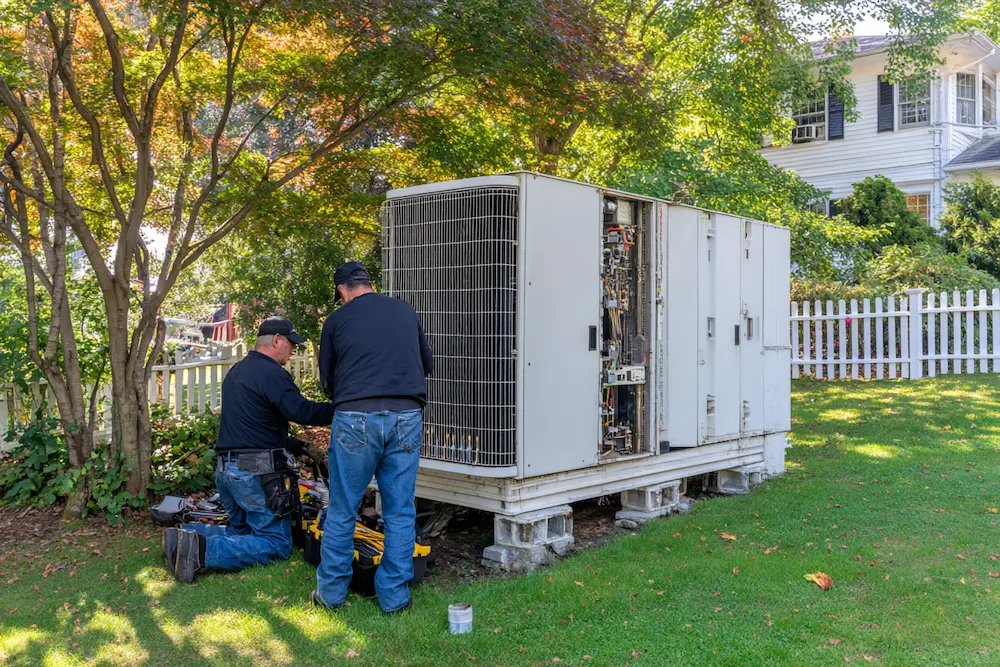
Replacing your HVAC system is one of the biggest investments most homeowners will make in their property. Unlike cosmetic upgrades, HVAC replacement directly affects indoor comfort, monthly energy bills, humidity control, air quality, and long-term home efficiency. In the New York Tri-State area, where homes experience both freezing winters and humid summers, choosing the right HVAC system can have a major impact on year-round comfort and operating costs.
For homeowners throughout Westchester County, HVAC replacement costs can vary dramatically depending on the type of equipment, the condition of the home, ductwork requirements, energy efficiency goals, and installation complexity. Some homeowners may spend a few thousand dollars replacing basic equipment, while others invest significantly more into high-efficiency heat pumps, zoning systems, ductless mini splits, or fully redesigned comfort systems.
Older homes in communities such as Scarsdale, Bronxville, Rye, White Plains, Harrison, Larchmont, and New Rochelle often require more than a simple equipment swap. Aging ductwork, poor airflow design, outdated electrical systems, attic heat gain, and partial renovations frequently increase both installation complexity and total project cost.
Before committing to a full replacement, homeowners should evaluate the condition of the current system carefully. In some situations, preventive servicing and airflow improvements can extend equipment life. Our ultimate guide to HVAC maintenance for homeowners explains how regular maintenance affects long-term HVAC performance and replacement timing.
HVAC replacement costs vary widely depending on equipment type, home layout, installation difficulty, and efficiency level.
Typical residential HVAC replacement ranges include:
These ranges reflect general residential installations, but actual pricing depends heavily on the home itself. Installing a high-efficiency heat pump in a large older Westchester home with duct modifications and electrical upgrades will cost substantially more than replacing a standard furnace in a smaller property.
Many homeowners evaluating replacement options compare system types before making a decision. Our guide to ductless mini split vs central air conditioning explains how these systems differ in efficiency, installation requirements, and comfort performance.
The equipment itself is only one part of the total project cost. Several additional factors can significantly affect the final investment.
Higher-efficiency systems generally cost more upfront but reduce long-term operating expenses. Ratings such as SEER2, AFUE, and HSPF2 measure how efficiently HVAC equipment converts energy into heating and cooling.
In the Northeast, where systems operate heavily in both winter and summer, efficiency ratings can have a major impact on annual utility costs.
Homeowners comparing modern systems should also review our guide to HVAC energy efficiency ratings in 2025 for a detailed breakdown of current standards.
Proper system sizing is critical for comfort and efficiency. Oversized systems short cycle, waste energy, and often struggle with humidity control. Undersized systems may run continuously while failing to maintain indoor comfort.
Professional HVAC load calculations evaluate insulation, square footage, windows, airflow, occupancy, and home orientation to determine the correct system capacity.
Many older homes throughout Westchester County contain aging or poorly designed duct systems that affect HVAC performance.
Common duct-related issues include:
In many replacement projects, ductwork upgrades become necessary to allow the new system to operate efficiently. Ignoring duct problems can reduce comfort, increase energy costs, and shorten equipment lifespan.
Homeowners with renovated or older properties may also benefit from our guide to HVAC challenges in older Bronxville homes and renovated Westchester properties.
Labor is a major portion of HVAC replacement cost, especially in complex installations.
Costs often increase when projects involve:
Improper HVAC installation is one of the leading causes of poor efficiency, airflow imbalance, and premature equipment failure.
High-quality installation directly affects energy performance, humidity control, airflow stability, and long-term system reliability.
Not every project requires replacing the entire HVAC system. In some situations, partial replacement may still be possible.
In many cases, replacing only one component of an older system may reduce overall efficiency and increase future repair risk.
HVAC replacement projects often include additional costs beyond the equipment itself.
Potential hidden costs include:
Older homes in the Tri-State area frequently require additional modifications to meet modern safety codes and efficiency standards.
Although HVAC replacement is a major investment, homeowners can often reduce long-term costs through smart planning and efficient system design.
Always compare multiple proposals carefully. Look beyond the equipment price and evaluate:
Financing can help homeowners install higher-quality systems without delaying replacement.
Our guide to HVAC financing options for affordable system upgrades explains common financing strategies available for residential projects.
High-efficiency heat pumps, energy-efficient central air systems, and certain electrification upgrades may qualify for local utility rebates or federal incentives.
Improving insulation, sealing air leaks, and correcting ductwork problems before installation may reduce the required system size and improve long-term efficiency.
For many homeowners, replacing an aging HVAC system improves comfort, lowers energy costs, and reduces ongoing repair expenses.
Potential benefits include:
The cheapest HVAC replacement is not always the best long-term value. Proper sizing, airflow design, installation quality, and energy efficiency all play a major role in long-term operating costs and comfort.
Many homeowners wait until a system completely fails before replacing it. Unfortunately, emergency replacements during peak summer or winter often reduce scheduling flexibility and increase stress.
Spring and fall are often ideal times for HVAC replacement because:
Property owners throughout Lower Westchester can also learn more through our Scarsdale HVAC services page for local HVAC replacement and installation support.
HVAC replacement is one of the most important investments homeowners make for long-term comfort, efficiency, and reliability. While replacement costs vary widely, understanding the factors that affect pricing can help homeowners make smarter decisions and avoid unnecessary surprises.
System type, efficiency ratings, ductwork condition, installation quality, home layout, and long-term operating costs all play a role in determining the best HVAC solution for your property.
Yukos Mechanical helps homeowners throughout Westchester County evaluate HVAC replacement options, improve system efficiency, and design reliable comfort solutions for older and modern homes alike. Contact Yukos Mechanical to schedule a professional HVAC consultation today.
Get expert recommendations and transparent pricing tailored to your home and comfort needs.
Request Your EstimateMost homeowners spend between $4,000 and $25,000 depending on system type, home size, and installation complexity.
System type, efficiency rating, ductwork condition, labor complexity, and home size are the biggest cost drivers.
If your system is over 12–15 years old or repair costs are high, replacement is usually the better long-term investment.
Yes, they reduce energy bills over time and can qualify for rebates or incentives.
Most installations take 1–3 days depending on complexity.
Our clients trust us for fast, reliable HVAC solutions—see their stories below!


Whether you’re planning a new system or just need service advice, our team is here to help—no pressure, no obligations.