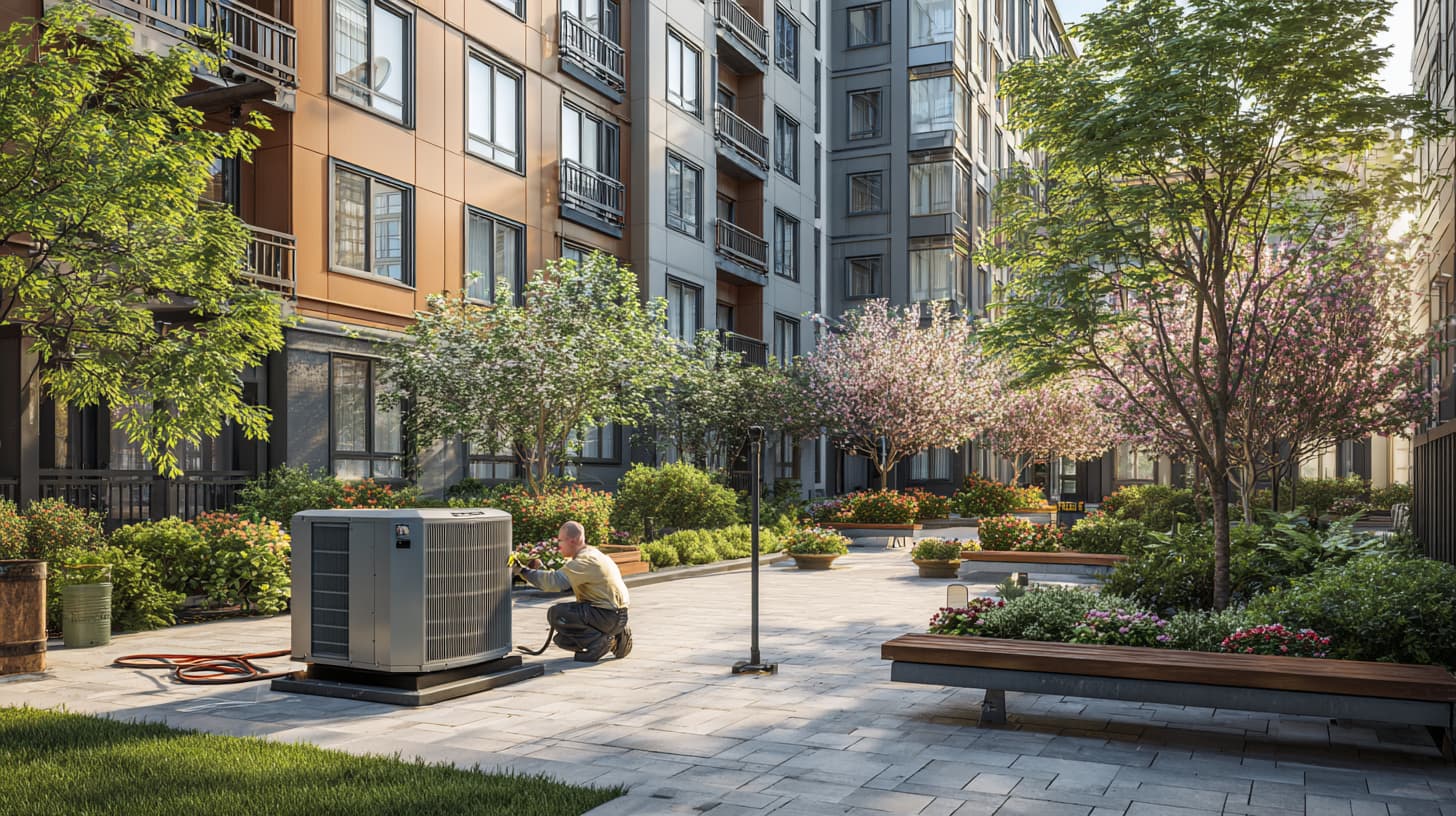
Boiler and hydronic heating systems remain the backbone of many multi-family buildings throughout Westchester County, especially in older apartment complexes, co-ops, mixed-use buildings, and large residential properties constructed decades before modern HVAC standards existed. While hydronic systems can provide reliable and energy-efficient comfort, aging infrastructure, circulation imbalance, outdated controls, and deferred maintenance often create major heating problems during the coldest months of the year.
Property managers and building owners across Westchester frequently deal with tenant complaints involving uneven heating, cold apartments, noisy radiators, pressure fluctuations, circulation failures, and rising operating costs. In many cases, these issues develop gradually as older hydronic systems age without full modernization.
Unlike forced-air HVAC systems, hydronic heating relies on a network of boilers, pumps, valves, piping loops, and heat emitters working together as a balanced system. When one component begins failing, the entire building's heating performance can become unstable.
Many older apartment buildings throughout Westchester still contain original piping layouts and partially upgraded mechanical systems that were modified over several decades. These mixed infrastructure conditions often make heating diagnostics far more complicated than simply replacing a boiler.
Buildings experiencing recurring heating imbalance may also benefit from reviewing our guide to winter HVAC risks most Tri-State buildings overlook for broader cold-weather HVAC planning considerations.
Hydronic heating systems became extremely common throughout the Northeast because they provide stable and efficient heating for larger residential buildings.
Instead of distributing heated air through ductwork, hydronic systems circulate heated water or steam through piping connected to radiators, baseboards, convectors, or fan coil units.
These systems remain common in:
Hydronic systems are often preferred because they provide:
However, older hydronic systems require proper balancing, maintenance, and modernization to continue operating efficiently.
Uneven heating is one of the most common complaints in Westchester multi-family buildings.
Some apartments become excessively hot because hydronic flow rates are improperly balanced throughout the building.
Units located closer to the boiler room or primary circulation loops often receive more heat than distant apartments when balancing valves are improperly adjusted.
Upper-floor apartments and end units may experience insufficient heating because of trapped air, circulation restrictions, undersized pumps, or aging piping systems.
Older buildings with drafty windows and inconsistent insulation further increase heating imbalance throughout the property.
Hydronic imbalance often develops gradually over years of partial renovations, piping modifications, and deferred maintenance.
Air intrusion is one of the most overlooked causes of heating performance problems in hydronic systems.
When air becomes trapped inside piping loops, radiators, or terminal units, water circulation becomes restricted and heat transfer efficiency drops significantly.
Common symptoms include:
Hydronic systems depend on stable circulation. Even small amounts of trapped air can reduce system efficiency and create widespread heating imbalance throughout a multi-family building.
Air infiltration may occur through leaking fittings, faulty fill valves, failing expansion tanks, or improper maintenance procedures.
Circulator pumps move heated water throughout hydronic systems and are essential for maintaining proper heat distribution.
Many older Westchester buildings still operate aging constant-speed pumps that run continuously during winter months.
As pumps deteriorate, buildings may experience:
Modern ECM variable-speed circulator pumps can often improve efficiency while reducing operating costs and balancing problems.
Short cycling occurs when boilers repeatedly turn on and off in rapid succession instead of operating in stable heating cycles.
Frequent cycling increases wear on ignition systems, burners, controls, and heat exchangers while reducing combustion efficiency and increasing fuel consumption.
Over time, repeated cycling can significantly shorten equipment lifespan.
Many short cycling problems occur after partial boiler upgrades where new equipment is installed without properly redesigning the hydronic distribution system.
Expansion tanks help maintain stable system pressure as heated water expands and contracts during operation.
Failing expansion tanks can create:
Older steel compression tanks frequently become waterlogged over time, reducing their ability to absorb pressure fluctuations properly.
Hydronic systems gradually accumulate corrosion byproducts, sludge, mineral deposits, and sediment inside piping and terminal equipment.
Over time, internal contamination restricts circulation and reduces heat transfer efficiency.
Common problem areas include:
Buildings with aging mechanical systems should also review our guide to signs your HVAC system is overdue for maintenance for broader preventative maintenance planning.
Many older apartment buildings still operate outdated boiler control systems installed decades ago.
Older controls often lack:
Without modern controls, boilers may operate at unnecessarily high temperatures regardless of outdoor conditions, significantly increasing fuel consumption.
Some older Westchester apartment buildings still operate steam heating systems rather than hot-water hydronic systems.
Steam systems require specialized balancing and maintenance procedures.
Poor steam balancing often causes some apartments to overheat while others remain underheated.
Deteriorated pipe insulation can also reduce efficiency significantly throughout older steam distribution systems.
Many Westchester multi-family buildings were constructed long before modern HVAC engineering standards existed.
As a result, heating systems often operate inside structures with:
Buildings throughout communities such as Larchmont HVAC services frequently require customized hydronic balancing strategies because no two systems age identically.
Preventive maintenance is critical for reducing emergency heating failures in multi-family buildings.
Routine hydronic inspections should include:
Proactive maintenance often reduces emergency service calls, improves tenant comfort, and extends equipment lifespan significantly.
Many Westchester building owners are modernizing older hydronic systems to improve efficiency and reduce long-term operating costs.
Common upgrades include:
These upgrades often improve both efficiency and overall tenant comfort throughout the building.
Hydronic heating systems function as complete mechanical networks. Long-term performance depends on proper balancing, circulation stability, control coordination, and preventative maintenance across the entire system.
Boiler and hydronic heating systems continue to provide reliable comfort throughout many Westchester multi-family buildings, but aging infrastructure and deferred maintenance can quickly create serious heating performance problems.
Uneven heating, trapped air, circulation failures, short cycling, pressure instability, and outdated controls often develop gradually over years of system imbalance and partial upgrades.
Proper diagnostics, hydronic balancing, preventative maintenance, and strategic modernization can dramatically improve comfort, efficiency, and long-term reliability throughout older residential buildings.
Yukos Mechanical helps multi-family properties throughout Westchester County diagnose complex boiler and hydronic heating issues, modernize aging systems, and improve long-term HVAC performance. Contact Yukos Mechanical to schedule a professional heating system evaluation today.
Preventative hydronic maintenance, circulation diagnostics, and modern boiler control upgrades can reduce heating complaints, improve comfort, and lower operating costs in Westchester multi-family buildings.
Schedule Heating System InspectionUneven heating is usually caused by circulation imbalance, trapped air, failing valves, aging pumps, or improper hydronic balancing throughout the building.
Gurgling sounds typically indicate trapped air inside the piping system, which restricts water circulation and reduces heating efficiency.
Short cycling may be caused by oversized boilers, low water flow, faulty controls, heat exchanger scaling, or improper zoning coordination.
Most multi-family boiler systems should receive professional maintenance before every heating season along with periodic inspections throughout winter.
Yes. Outdoor reset controls, smart staging systems, and variable-speed pumping can significantly improve efficiency, comfort, and overall system stability.
Our clients trust us for fast, reliable HVAC solutions—see their stories below!


Whether you’re planning a new system or just need service advice, our team is here to help—no pressure, no obligations.