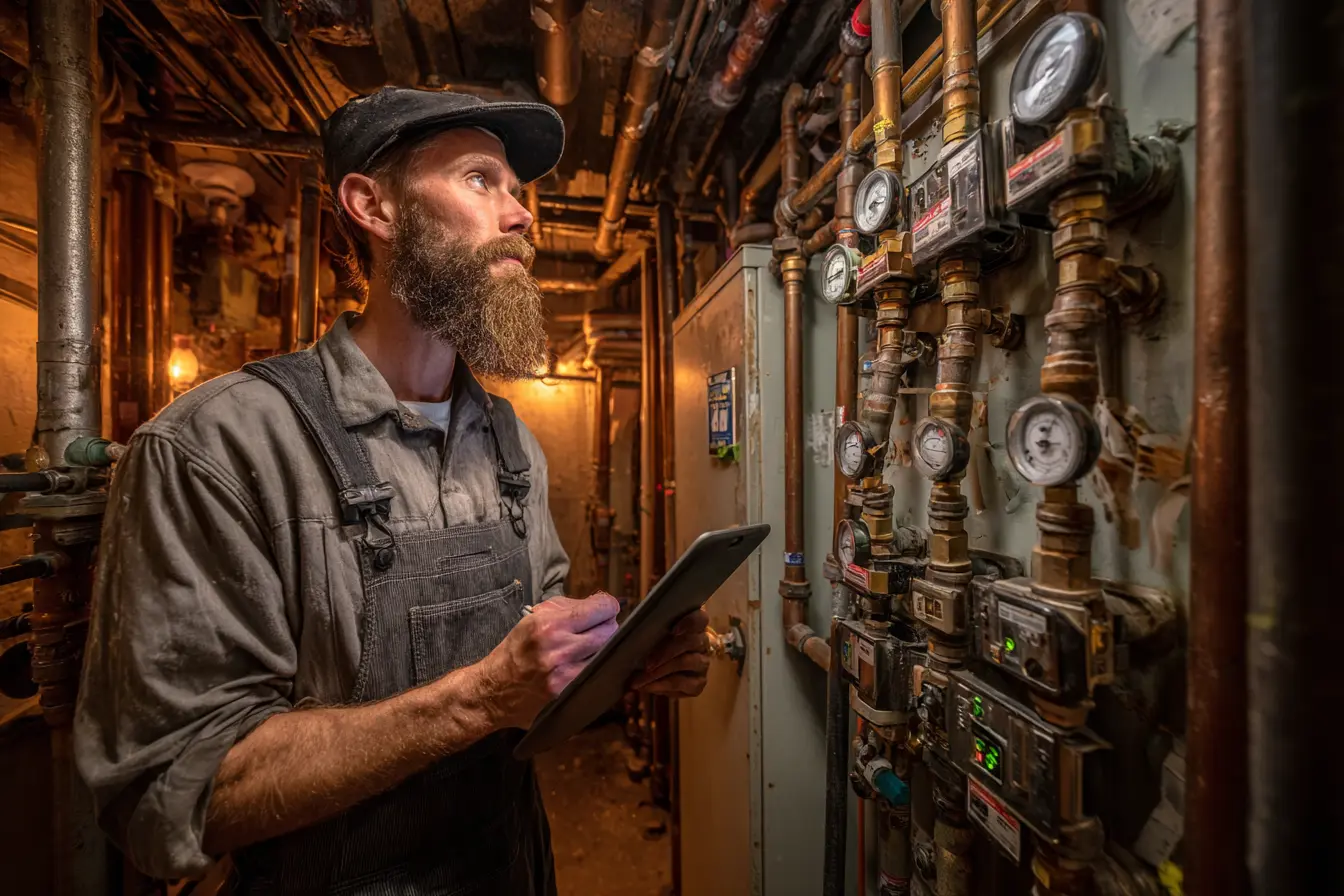
In the New York Tri-State area, January and February do not simply “test” HVAC systems — they expose them. A borderline boiler, clogged filter, drifting thermostat sensor, or weak circulation pump can quickly escalate into a no-heat emergency once outdoor temperatures drop and systems begin operating nonstop.
For homeowners, property managers, multifamily operators, and commercial facilities throughout NYC, Westchester County, Rockland County, and Bergen County, mid-winter is the point where small HVAC inefficiencies become operational problems. Systems that appeared stable earlier in the season often begin showing signs of stress once sustained cold weather pushes equipment closer to maximum capacity.
This mid-winter HVAC reality check is designed to help identify the warning signs that commonly lead to frozen pipes, tenant complaints, airflow imbalance, emergency service calls, and expensive heating failures during the coldest part of the season.
Many of these winter risks overlap closely with the broader January HVAC system failures affecting Tri-State properties, especially in older buildings with aging infrastructure and uneven heating distribution.
If your heating system feels like it is “barely keeping up” during cold nights, it is already warning you that system stress is increasing.
Many homeowners assume a fall tune-up guarantees stable winter HVAC performance. In reality, operating conditions change dramatically once January and February arrive.
By mid-winter, HVAC systems are:
These conditions expose weak components that may not have shown obvious symptoms during early winter startup periods.
Minor airflow restrictions, ignition inconsistencies, thermostat drift, or circulation imbalance become much more severe once systems begin operating continuously during prolonged cold weather.
The first priority during mid-winter is verifying that the primary heating source remains stable under heavy demand.
Boilers should maintain stable pressure, steady combustion, and consistent circulation.
Watch for:
Many multifamily properties throughout New Rochelle HVAC services experience hydronic circulation imbalance during mid-winter because older boiler systems operate under continuous demand for extended periods.
Property managers overseeing hydronic systems may also benefit from reviewing our guide to common boiler and hydronic heating problems in Westchester buildings.
Furnaces should ignite smoothly and maintain stable airflow throughout heating cycles.
Potential warning signs include:
Cold-weather heat pump performance should be monitored closely during January and February.
Key concerns include:
Heat pumps relying heavily on backup electric heat often cause dramatic utility bill increases during mid-winter cold snaps.
Many winter comfort complaints are not caused by total heating failure.
Instead, they originate from airflow and heat-distribution problems.
Common airflow issues include:
In older Westchester homes and prewar NYC buildings, uneven airflow distribution is often the weakest part of the HVAC system.
As outdoor temperatures fall, airflow imbalance becomes more noticeable because HVAC systems operate continuously and expose weak distribution zones throughout the building.
Homeowners throughout Rye HVAC services frequently experience uneven heating because many historic homes contain retrofit ductwork layered onto older building layouts.
Many of these airflow and zoning challenges overlap with the issues discussed in our guide to older Westchester HVAC performance problems.
Frozen pipes rarely begin with a total heating shutdown.
Most freeze events begin in localized cold zones caused by uneven heat distribution.
High-risk areas include:
Maintaining stable heat throughout all zones is critical during prolonged cold weather.
Property owners concerned about freeze exposure should also review our guide to frozen pipe risks and HVAC system failures during winter.
Many frozen pipe emergencies begin with small airflow or circulation problems that quietly create cold pockets inside buildings.
Small control-system inaccuracies create major comfort problems during mid-winter operation.
Common thermostat and control issues include:
Control problems often create predictable comfort complaints involving:
Sudden increases in heating costs often signal HVAC inefficiency before major failures occur.
Common causes include:
Many homeowners uncover efficiency issues similar to those discussed in our guide to winter HVAC energy-saving strategies.
If your system is already showing:
professional HVAC service should not be delayed.
Many severe winter breakdowns begin with the same warning signs discussed in our guide to common HVAC maintenance warning symptoms.
For commercial and multifamily buildings, mid-winter HVAC planning is about operational stability and risk reduction.
Important priorities include:
Commercial facilities focused on ventilation reliability and long-term system performance may also benefit from reviewing the Wolf Brewery HVAC project in White Plains, which involved specialized airflow and environmental-control planning.
Modern HVAC upgrades often improve winter reliability by stabilizing airflow, environmental conditions, and heating performance during sustained cold-weather operation.
Specialized residential environmental-control projects such as this wine room condenser replacement project in Greenwich demonstrate how properly engineered systems maintain stable climate performance under demanding operating conditions.
Mid-winter HVAC inspections are not just about avoiding breakdowns — they help stabilize comfort, improve efficiency, reduce freeze risk, and protect long-term system reliability.
January and February expose HVAC weaknesses throughout the Tri-State region because systems operate continuously under extreme cold-weather demand. Small airflow problems, hydronic imbalance, thermostat drift, freeze exposure, and deferred maintenance issues become much more serious once systems lose operational margin during peak winter conditions.
Mid-winter inspections, airflow evaluation, freeze prevention, and proactive HVAC maintenance all play critical roles in reducing breakdown risk while improving comfort and operational stability.
Yukos Mechanical helps homeowners, property managers, and commercial facilities throughout Westchester County improve HVAC reliability, stabilize winter heating performance, reduce freeze-related risks, and diagnose airflow and comfort issues through professional HVAC service and preventative maintenance. Contact Yukos Mechanical to schedule professional mid-winter HVAC service today.
Get a mid-winter HVAC checkup for your home or building and catch small issues before the next deep-freeze pushes your system over the edge.
Schedule Winter ServiceMid-winter places HVAC systems under nonstop heating demand, exposing airflow restrictions, circulation problems, aging components, and control-system weaknesses.
Yes. Restricted airflow, duct leakage, clogged filters, and poor distribution balancing commonly create cold rooms and uneven heating during winter.
Freeze events usually begin in localized cold zones where airflow or hydronic circulation is weak, allowing temperatures near pipes to drop below freezing.
Repeated resets, unusual noises, uneven temperatures, rising utility bills, weak airflow, and persistent burning odors are common signs of HVAC strain.
Yes. Mid-winter inspections help identify airflow problems, freeze risks, control issues, and failing components before they lead to emergency heating failures.
Our clients trust us for fast, reliable HVAC solutions—see their stories below!


Whether you’re planning a new system or just need service advice, our team is here to help—no pressure, no obligations.